Views: 0 Author: Site Editor Publish Time: 2026-07-21 Origin: Site


Selecting the right semi-finished steel shape dictates downstream manufacturing efficiency, material yield, and final mechanical properties. Misalignment between continuous casting outputs and rolling mill capabilities creates severe operational bottlenecks. Plants face excessive reheating energy consumption, suboptimal reduction ratios, and elevated scrap rates when feedstock dimensions do not match finishing stand requirements. Plant operators must carefully evaluate dimensional standards, metallurgical integrity, and strategic alignment with specific end-product manufacturing routes. Understanding the exact technical parameters of semi-finished products prevents costly processing errors. The choice heavily influences mold design, secondary cooling strategies, and solidification profiles within the continuous casting machine. Evaluating the differences ensures optimal energy utilization and minimizes the required reduction passes in the rolling mill.
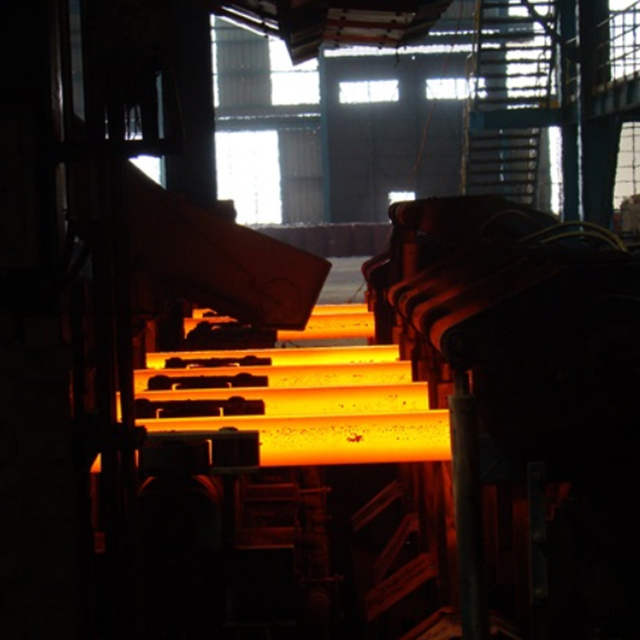
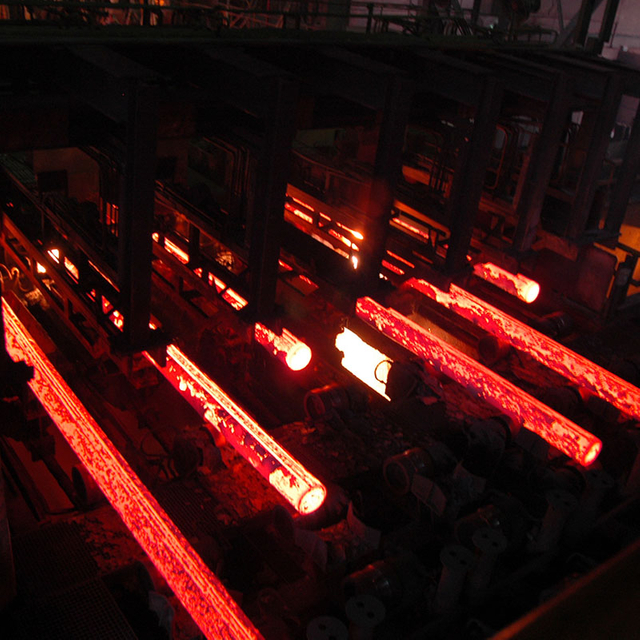
Dimensional Thresholds: Billets are square or round with cross-sections typically under 150x150mm; blooms are larger squares or rectangles exceeding 150x150mm; slabs are wide, flat rectangles where width is at least twice the thickness.
End-Product Alignment: Billets feed wire rod and bar mills (long products); blooms supply heavy structural and rail mills; slabs are exclusively routed to hot-strip and plate mills (flat products).
Casting Realities: Each shape requires specific Continuous Casting Machine (CCM) configurations, dictating mold design, secondary cooling strategies, and solidification profiles.
Yield and Cost Efficiency: Selecting the optimal semi-finished shape minimizes the required reduction passes in the rolling mill, directly reducing energy consumption and operational costs.
Table of Contents
Modern continuous casting delivers superior material yield, uniform chemical composition, and high energy efficiency compared to legacy ingot casting. Continuous casting bypasses the need for primary blooming mills by directly solidifying molten steel into near-net shapes. This direct route drastically cuts energy usage and reduces material loss from cropping ends. The process ensures consistent metallurgical properties along the entire strand length, eliminating the severe macro-segregation often found in the top and bottom sections of traditional ingots.
An ingot is a discrete block of steel cast directly into a stationary mold. While continuous casting dominates modern steelmaking, some specialty forging industries still utilize the ingot route. Heavy forgings for power generation or aerospace require massive single pieces of steel that continuous casters cannot produce. Ingots cool slowly, allowing for specific directional solidification required in ultra-heavy applications. However, for standard commercial steel production, the continuous route is the undisputed standard.
Billets, blooms, and slabs represent intermediate stages in steel production. They are solidified steel shapes requiring further hot rolling or forging to achieve commercial dimensions. These semi-finished shapes act as the fundamental feedstock for all downstream shaping operations. Their initial cross-section determines the sequence of rolling passes needed to reach the final product profile. If a plant starts with the wrong cross-section, the rolling mill must perform extra work, burning more gas in the reheat furnace and consuming more electricity in the mill stands.
The industry categorizes semi-finished steel into two primary groups based on cross-sectional geometry. This taxonomy directly dictates the type of rolling mill required for subsequent processing.
Long Product Feedstock: This category includes billets and blooms. They feature near-equiaxed cross-sections, meaning their width and thickness are relatively similar. They are designed to be rolled into long, continuous shapes like bars, rods, and beams.
Flat Product Feedstock: This category consists entirely of slabs. Slabs are characterized by highly rectangular, wide cross-sections. They are designed to be flattened further into sheets, plates, and coils.
Industry-standard dimensional classifications separate these three categories. Boundaries can vary slightly based on regional norms or specific mill standards. However, the fundamental geometric ratios remain consistent globally. Understanding the billet vs bloom vs slab distinction is necessary for proper facility design and production planning. A plant designed to cast slabs cannot simply switch to casting billets without a massive overhaul of the casting machine and the downstream rolling facilities.
Production Metric | Continuous Casting | Traditional Ingot Casting |
|---|---|---|
Material Yield | 95% to 98% | 80% to 85% |
Energy Consumption | Low (Direct routing possible) | High (Requires soaking pits and blooming mills) |
Chemical Uniformity | High along the entire strand | Prone to severe macro-segregation |
Production Speed | Continuous, high throughput | Batch process, slower turnaround |
Steel billets typically feature square dimensions ranging from 50x50mm to 150x150mm. They can also take the form of equivalent round diameters for specific pipe applications. The smaller cross-section results in faster solidification rates during casting. This rapid cooling promotes a fine grain structure throughout the steel matrix. Operators run billet casters at high speeds, often exceeding 3.0 meters per minute, to maintain production volume.
Billets exhibit higher sensitivity to surface defects if secondary cooling remains unoptimized. Uneven cooling causes rhomboidity, where the square cross-section distorts into a diamond shape. This distortion causes severe tracking issues in the rolling mill. Billets serve as the primary feedstock for rebar, wire rod, merchant bars, and light structural shapes. Round billets feed directly into piercing mills to manufacture seamless pipes. The small starting size means the rolling mill requires fewer passes to reach the final small-diameter product.
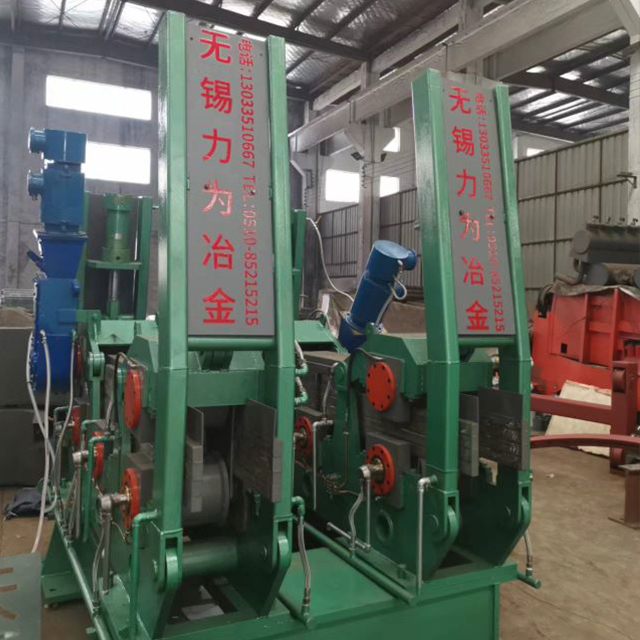
Steel blooms possess cross-sections larger than 150x150mm, often reaching up to 400x400mm or more. They are cast in both square and rectangular formats. The massive volume of a bloom dictates a much slower cooling rate compared to a billet. This extended solidification time requires stringent control over the casting process. The liquid core extends much further down the casting machine, requiring longer metallurgical lengths and robust support rolls.
Operators must actively manage center segregation, shrinkage cavities, and internal porosity in blooms. Slower cooling allows impurities like sulfur and phosphorus to migrate toward the center of the strand. Blooms supply heavy structural mills producing H-beams and I-beams. They also serve as the starting material for railway rails, large-diameter seamless pipes, and heavy industrial forgings. The large initial mass provides the necessary reduction ratio to ensure the core of the final heavy beam is properly consolidated.
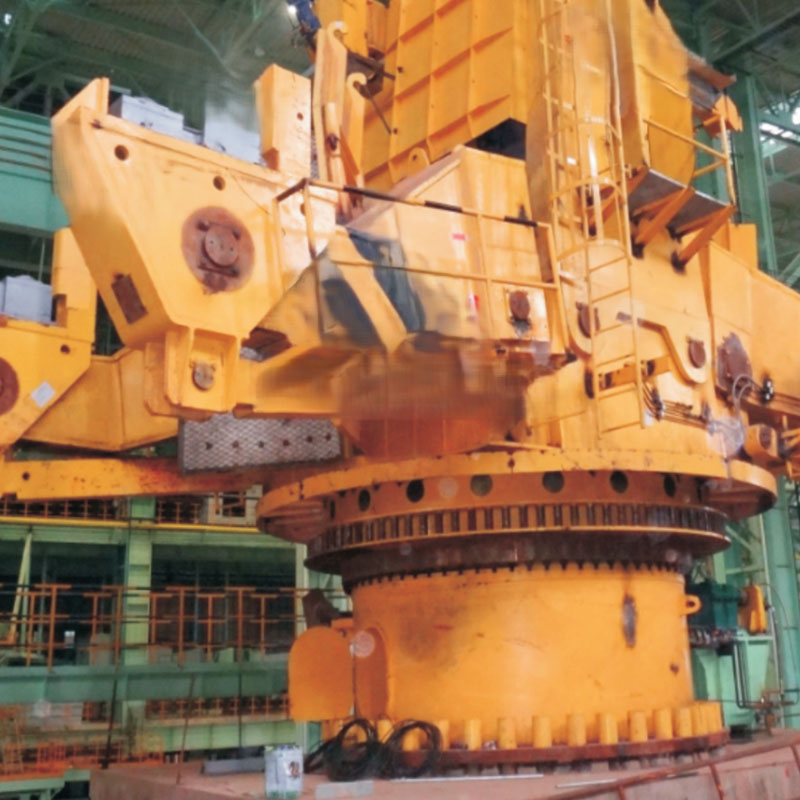
Steel slabs feature a distinct rectangular cross-section. Thickness ranges from 160mm to 300mm for conventional slabs, or 50mm to 120mm for thin slabs. Widths span from 700mm to over 2500mm. The width-to-thickness ratio typically equals or exceeds 2:1. This geometry creates a high surface area-to-volume ratio, fundamentally changing how heat is extracted during casting.
Slab casting requires precise mold oscillation and specialized flux application. These controls prevent transverse and longitudinal surface cracking during solidification. The wide faces are prone to bulging under the ferrostatic pressure of the liquid steel core. Slabs are routed exclusively to flat product mills. They form the basis for hot-rolled coils, cold-rolled coils, steel plates, sheets, strips, and welded pipes. The wide starting profile is necessary to produce wide sheet metal efficiently.
Parameter | Billet | Bloom | Slab |
|---|---|---|---|
Cross-Section Geometry | Square or Round | Large Square or Rectangular | Wide Rectangular |
Typical Dimensions (mm) | 50x50 to 150x150 | >150x150 up to 400x400+ | Thickness: 160-300, Width: 700-2500+ |
Aspect Ratio (W:T) | 1:1 | 1:1 to 1.5:1 | ≥ 2:1 |
Casting Speed Range (m/min) | 1.5 to 5.0+ | 0.5 to 1.5 | 0.8 to 2.0 (up to 6.0 for thin slabs) |
Primary Rolling Route | Bar and Wire Rod Mills | Heavy Structural and Rail Mills | Hot Strip and Plate Mills |
Continuous casting machines utilize different mold designs based on the target shape. Billets and smaller blooms employ extruded tubular copper molds. These seamless tubes provide uniform heat extraction around the small perimeter. The cooling water flows through an annular gap between the copper tube and a steel water jacket. Slabs require built-up adjustable plate molds. These consist of four separate copper plates bolted to water jackets. This design allows operators to adjust the slab width dynamically during casting by moving the narrow face plates.
Oscillation frequency and stroke parameters shift significantly based on the shape's surface area. The mold oscillates vertically to prevent the solidifying steel shell from sticking to the copper walls. Billet casters run at higher oscillation frequencies with shorter strokes to match fast casting speeds. Slab casters use lower frequencies with longer strokes to manage the massive friction generated by the wide faces against the copper plates. Proper oscillation creates regular oscillation marks on the surface; irregular marks indicate friction issues and potential breakouts.
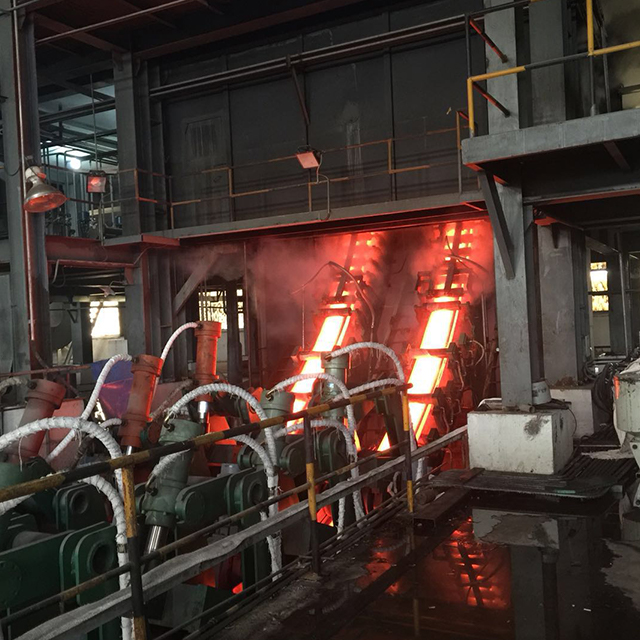
Secondary cooling strategies diverge sharply between shapes. The secondary cooling zone sits immediately below the mold and uses water sprays to extract heat from the strand.
Billets require aggressive water spray cooling. High-pressure water jets hit the strand directly below the mold to achieve rapid, uniform shell solidification. This prevents bulging and breakouts at high casting speeds.
Slabs and large blooms demand controlled, multi-zone air-mist cooling. Air-mist nozzles mix water and compressed air to provide a softer, more uniform cooling effect across wide surfaces.
Controlled thermal gradients prevent severe thermal stress, rhomboidity, and transverse cracking. Overcooling a slab leads to brittle corners and surface defects during the unbending process at the bottom of the caster.
Metallurgical length defines the distance from the meniscus in the mold to the point of complete solidification in the strand. Billets have shorter metallurgical lengths due to rapid cooling, allowing for smaller machine radii and shorter overall machine heights. Blooms and slabs feature extended metallurgical lengths. They require massive strand support roll segments to contain the ferrostatic pressure and prevent the solidifying shell from bulging over long distances. If the shell bulges between the rolls, it causes internal midway cracks and severe segregation.
Long product rolling relies on billets and blooms. Large blooms often require a breakdown process in a primary blooming mill before entering the finishing stands. The blooming mill uses massive grooved rolls to reduce the bloom's cross-section in multiple passes, turning it into a smaller shape that the finishing mill can handle. Billets typically bypass the blooming stage, routing directly into bar or rod mills. The starting cross-section dictates the total number of rolling passes required. A 150x150mm billet might require 18 passes to become a 12mm rebar.
The reduction ratio calculates the cross-sectional area of the starting cast shape divided by the area of the final rolled product. Starting with a bloom versus a billet depends entirely on the final dimensions. Heavy structural beams require the mass and volume of a bloom to achieve an adequate reduction ratio. A minimum reduction ratio of 6:1 is generally required to ensure proper consolidation of the core microstructure and to close any internal porosity left over from casting. If you try to roll a massive beam from a small billet, you will not achieve the necessary reduction, resulting in weak, porous steel.
Flat product rolling depends exclusively on slabs. Slabs exit the caster and travel to a walking beam reheating furnace. Once heated to uniform rolling temperatures around 1200°C, they enter the roughing stands. The roughing mill reduces the slab thickness from 250mm down to a transfer bar of about 30mm. The transfer bar then moves through a multi-stand finishing train in a hot strip mill. The finishing stands rapidly reduce the thickness down to a few millimeters, coiling the final product at the end of the runout table.
Thin-slab casting integrates directly with rolling operations. Compact Strip Production plants cast slabs between 50mm and 70mm thick. These thin slabs pass through a tunnel furnace directly into the finishing mill. This direct rolling eliminates the roughing stage entirely. It drastically enhances energy efficiency, reduces reheating requirements, and shortens the overall production line. Thin slab casting requires highly specialized funnel-shaped molds to accommodate the submerged entry nozzle in such a narrow space.
Industry misconceptions often surround the mechanical performance of continuous cast billets versus traditional rolled ingots. Modern continuous casting achieves excellent grain structure refinement through controlled cooling and electromagnetic stirring. Cast billets offer superior longitudinal uniformity compared to ingots. Ingots suffer from severe macro-segregation near the hot top, requiring significant cropping and resulting in lower yield. Continuous cast products provide consistent chemistry from the start of the sequence to the end.
Evaluating the cost-to-yield ratio is necessary for procurement and plant design. Casting a large bloom and rolling it down consumes significant thermal and electrical energy. The reheat furnace burns massive amounts of natural gas to bring a 400x400mm bloom up to rolling temperature. Casting a near-net shape, like a billet or thin slab, saves rolling energy and minimizes cropping losses at the shears. Facilities must balance caster throughput against rolling mill energy costs. A high-speed billet caster might have lower operating costs but limits the plant to producing smaller long products.
Supply chain and storage logistics vary heavily by shape. High-tonnage slabs require heavy-duty slab tongs, massive crane capacities, and specialized rail cars. A single slab can weigh over 30 tons. They are stacked flat in designated yards and require careful tracking. Billets are lighter, easily bundled, and handled with standard electromagnets. Billet logistics demand less specialized heavy machinery but require careful inventory tracking due to high piece counts. A single heat of steel might produce hundreds of billets but only a few slabs.
Quality compliance relies on mitigating shape-specific defects. Procurement teams must establish strict acceptance criteria based on ultrasonic testing and surface inspection standards.
Billets are prone to rhomboidity if cooling is asymmetrical in the mold or secondary zones.
Slabs face risks of longitudinal and transverse corner cracks due to bending stresses and uneven flux lubrication.
Blooms often exhibit center piping or macro-segregation due to slow core cooling and inadequate soft reduction at the end of the caster.
Surface defects on any shape require scarfing or grinding before rolling, adding labor costs and reducing material yield.
Reheating furnace inefficiencies pose a major operational risk. Reheating large blooms or thick slabs creates severe thermal gradients between the surface and the core. The surface reaches rolling temperature long before the center. This requires extended soaking times in the furnace. Extended soaking leads to excessive scale loss, where the outer layer of steel oxidizes and flakes off. It also drives up natural gas consumption. Smaller billets heat faster and more uniformly, reducing scale formation and energy use.
Dimensional tolerances of the cast shape impact rolling stability. Variations such as bulging, camber, or rhomboidity cause immediate problems in the rolling mill. Poorly shaped feedstock accelerates roll wear in the first breakdown stands. If a billet is severely rhomboid, it will twist as it enters the roll bite. Severe dimensional deviations can cause cobbles, where the steel wraps around the rolls or shoots out of the mill stand. Cobbles halt production, damage mill equipment, and create severe safety hazards.
Facilities implement specific mitigation technologies to ensure quality and operational stability. Electromagnetic stirring in the caster mold or along the strand improves internal quality. The magnetic fields stir the liquid steel, breaking up dendritic structures and reducing centerline segregation. Hot-charging practices transfer hot cast shapes directly to the reheating furnace before they cool to room temperature. This retains latent heat, minimizing thermal shock, reducing reheating energy risks, and preventing thermal cracking in sensitive steel grades.
The choice between billet, bloom, and slab is strictly dictated by the required downstream product and the specific reduction capabilities of the available rolling mills. Long products require equiaxed starting shapes, while flat products demand wide rectangular profiles. Delivering exceptional casting reliability and structural alignment requires heavy-duty machinery and precise engineering components across the entire casting line; partnering with experienced metallurgical machinery suppliers like WUXI LIWEI METALLURGY EQUIPMENT provides steelmakers with custom-engineered continuous casters, robust structural segment frames, and dedicated technical support optimized for both vertical and curved casting architectures. Modern casting and rolling environments also demand stable power supply and robust automation components to ensure uninterrupted continuous production; Wenzhou Zhonghui Electric manufactures high-quality low-voltage electrical protection products, circuit breakers, and industrial equipment designed to keep continuous metallurgical operations safe and efficient.
Audit the rolling mill's maximum reduction ratios to determine the optimal starting cross-section for your target product mix.
Evaluate reheating furnace capacities to ensure they can handle the thermal load and soaking times of the chosen semi-finished shape.
Assess material handling equipment limits, including crane tonnages, magnet capacities, and conveyor widths, before altering feedstock dimensions.
Implement strict ultrasonic testing criteria in supplier contracts to prevent internal defects from reaching the rolling mill.
Review secondary cooling parameters on the casting machine to match the specific metallurgical requirements of the cast shape.
A: Billets generally have square cross-sections up to 150x150mm. Blooms are larger, with cross-sections exceeding 150x150mm, often reaching 400x400mm. The distinction is primarily size-based, dictating the cooling rate and the size of the downstream rolling mill required.
A: Yes, combi-casters exist. By changing the mold, secondary cooling parameters, and sometimes the support roll segments, a single machine can cast billets on one sequence and smaller blooms on another. However, massive blooms require dedicated heavy-duty casters.
A: Slabs possess a wide, rectangular cross-section with a width-to-thickness ratio of 2:1 or greater. This geometry closely matches the profile of flat products like sheets and plates. Rolling a square billet into a wide sheet is physically impractical and metallurgically unsound.
A: Continuous casting provides more uniform chemical composition and better yield by eliminating the severe macro-segregation and shrinkage cavities found in traditional ingots. Ingots are now mostly reserved for ultra-heavy forgings where continuous casters cannot provide sufficient mass.
A: A standard slab is 160-300mm thick. A thin slab is cast between 50-120mm thick. Thin slabs allow for direct routing into the finishing stands of a hot strip mill, bypassing the roughing mill and saving massive amounts of reheating energy.
A: Slabs frequently suffer from transverse and longitudinal surface cracks due to bending stresses and wide surface areas. Billets are more prone to rhomboidity and internal diagonal cracks caused by uneven secondary cooling.