Views: 0 Author: Site Editor Publish Time: 2026-09-28 Origin: Site


Primary steelmaking methods like the Basic Oxygen Furnace (BOF) and Electric Arc Furnace (EAF) excel at rapid melting and initial carbon reduction. However, they fall short when tasked with meeting the strict mechanical and chemical specifications required by modern manufacturing. Automotive, aerospace, and heavy construction sectors demand ultra-clean steel with exact micro-alloying. Attempting precise alloying and temperature control inside the primary furnace creates a massive operational bottleneck. It reduces overall throughput, accelerates refractory wear, and frequently results in inconsistent steel grades. We need a better approach to separate melting from metallurgical fine-tuning.
This is where the ladle refining process becomes essential. By decoupling melting and refining, steelmakers achieve exact chemical compositions, perfect temperature homogeneity, and thorough inclusion removal before continuous casting. Shifting secondary metallurgy to the ladle optimizes plant efficiency, reduces raw material waste, and guarantees high-quality steel production.
Quality Assurance: Ladle refining is mandatory for producing ultra-clean steel by effectively removing non-metallic inclusions and lowering sulfur/phosphorus content.
Operational Efficiency: Shifting metallurgical adjustments to the ladle frees up the primary furnace, significantly increasing overall plant tap-to-tap production rates.
Precision Control: Advanced Ladle Refining Furnace (LRF) systems enable exact temperature homogenization and micro-alloying, reducing the rate of downgraded or rejected heats.
Cost Optimization: Despite the initial energy and equipment investment, optimized secondary metallurgy reduces raw material waste, maximizes alloy recovery, and extends the lifespan of primary furnace refractories.
Table of Contents
Modern steel grades demand absolute precision. Advanced High-Strength Steels (AHSS), electrical steels, and API line pipes require strict parts-per-million (ppm) control of impurities. For example, API X80 pipeline grades often restrict sulfur to below 10 ppm and hydrogen to below 2 ppm. High sulfur or oxygen levels compromise structural integrity and cause catastrophic failures under stress. You cannot achieve this level of cleanliness in a standard EAF or BOF because those vessels operate under highly oxidizing conditions. Success in modern steelmaking means hitting tight chemical windows while maintaining high production volumes without sacrificing quality. The melt shop must transition the steel into a reducing environment to execute deep desulfurization and inclusion removal.
Holding molten steel in an EAF or BOF for alloying and temperature adjustment wastes electrical energy and consumes valuable melting time. A modern EAF can melt a 150-ton scrap charge in 40 to 45 minutes. If operators hold that heat in the furnace for an additional 20 minutes to adjust chemistry and temperature, furnace utilization drops by nearly 30 percent. Moving these steps to the Ladle Refining station maximizes primary melter utilization. The primary furnace taps the heat and immediately begins melting the next bucket of scrap. This separation drastically increases plant throughput and lowers overall energy consumption per ton of steel produced.
Successful secondary metallurgy relies on several core pillars. Melt shop operators must monitor and control these variables strictly to produce prime-yield steel.
Chemical homogeneity ensures uniform alloy distribution throughout the entire heat, preventing localized weak points in the final rolled product.
Thermal uniformity eliminates cold spots in the ladle that disrupt continuous casting operations and cause premature freezing in the tundish.
Micro-cleanliness focuses on removing non-metallic inclusions, such as alumina and silicates, that weaken the final product and cause surface defects.
Optimal castability guarantees smooth flow through submerged entry nozzles (SEN) without clogging, ensuring uninterrupted continuous casting sequences.
Dissolved oxygen in molten steel causes porosity during solidification and prevents effective desulfurization. Operators add aluminum, silicon, or calcium during tapping to react with this oxygen. These elements form solid oxides that float into the slag layer. Once the steel is fully killed (deoxidized), desulfurization begins. Operators add synthetic basic slags, typically composed of lime (CaO) and calcium aluminate, to the ladle. Vigorous argon stirring mixes the steel and slag. The basic slag captures sulfur effectively, pulling it out of the molten bath. This step meets the ultra-low sulfur specifications required for sour-service pipeline grades and high-stress automotive components.

Operators adjust steel chemistry using bulk additions and wire-fed alloying. Bulk alloys, dropped from overhead weigh bins, adjust major elements like manganese, silicon, or chromium. Wire feeding introduces precise amounts of micro-alloys like titanium, niobium, or boron deep into the bath. The controlled, low-oxygen environment of the ladle ensures high recovery rates. Expensive ferroalloys are not lost to oxidation, unlike additions made directly in the highly oxidized environment of the primary furnace.
Alloy Type | Addition Method | Typical EAF Recovery Rate | Typical LRF Recovery Rate |
|---|---|---|---|
Ferro-Manganese (FeMn) | Bulk Bin | 60% - 70% | 90% - 95% |
Ferro-Silicon (FeSi) | Bulk Bin | 50% - 65% | 85% - 95% |
Titanium (FeTi) | Cored Wire | Not Recommended | 75% - 85% |
Niobium (FeNb) | Cored Wire | Not Recommended | 85% - 95% |
Solid alumina inclusions form rapidly during aluminum deoxidation. These hard, jagged particles have a melting point around 2050°C, well above the typical steel casting temperature of 1550°C. Consequently, they remain solid and easily clog continuous casting nozzles. Operators inject cored wire, such as calcium silicide (CaSi), deep into the ladle to solve this. Calcium modifies these solid alumina inclusions into liquid calcium aluminates (e.g., 12CaO·7Al2O3). This modification prevents nozzle clogging during casting. It also significantly improves the steel's transverse mechanical properties by ensuring inclusions remain spherical and do not elongate into stringers during rolling.
Alloying additions, inert gas stirring, and holding times cause the molten steel to lose heat. The ladle refining furnace uses three-phase AC graphite electrodes to compensate for these thermal losses. Arc heating precisely raises the bath temperature at rates typically between 3°C and 5°C per minute. Delivering steel to the continuous caster at a strict, uniform temperature is vital. Proper superheat control—maintaining the steel slightly above its liquidus temperature—prevents catastrophic breakouts on the casting floor or premature freezing in the tundish.
Argon gas is injected through porous refractory plugs located in the ladle bottom. This bottom-purging creates a stirring action that homogenizes the bath. The physics of this stirring promote the collision and agglomeration of non-metallic inclusions. As these microscopic particles collide, they grow larger. According to Stokes' Law, larger particles float upward more rapidly through the molten steel. The synthetic slag layer then absorbs and traps these inclusions, leaving behind exceptionally clean steel ready for casting. Operators use vigorous stirring (100-200 Nl/min) for desulfurization and gentle stirring (20-50 Nl/min) for final inclusion floatation.
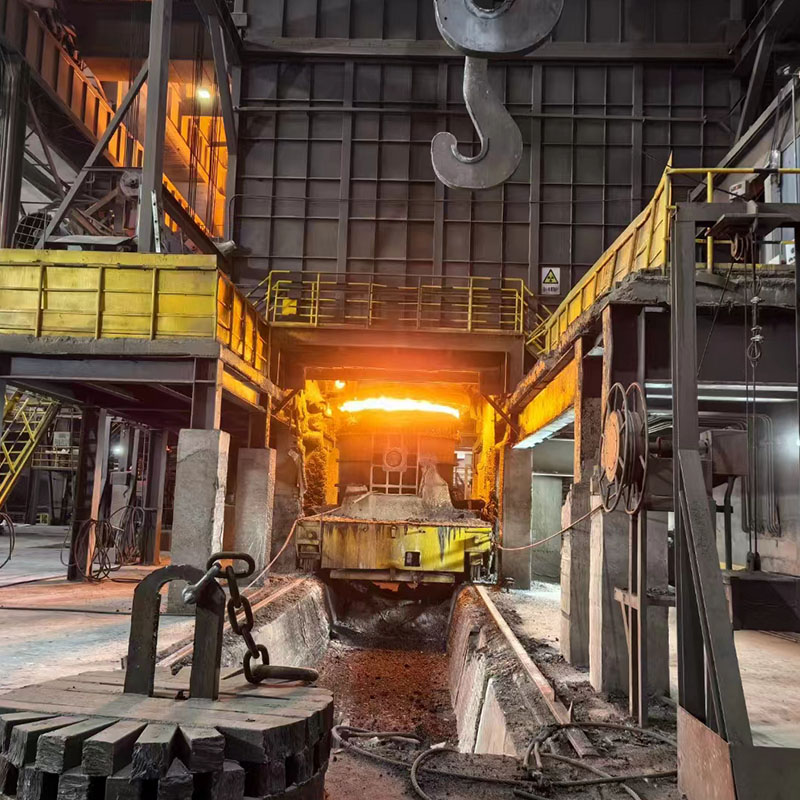
Matching LRF equipment to production goals requires careful evaluation of the melt shop's throughput. You must assess the transformer capacity (MVA) against required heating rates and ladle sizes. A 100-ton ladle typically requires a 15 to 20 MVA transformer to achieve a 4°C/min heating rate. A larger transformer allows faster heating but requires robust electrical infrastructure and heavier electrode columns. Plant layout is equally important. Integrating an LRF between the melting shop and the continuous caster demands an efficient logistical footprint. Transfer cars, ladle turrets, and crane access must align perfectly to minimize transfer times and prevent excessive heat loss.
The ladle refining process often serves as a prerequisite stage for further vacuum treatment. Heats requiring critical hydrogen and nitrogen removal must go to Vacuum Degassing (VD) or Vacuum Oxygen Decarburization (VOD) stations. Vacuum treatments cause significant temperature drops, often losing 1.5°C to 2.0°C per minute. The LRF provides the necessary arc heating to superheat the steel before vacuum treatment. It also handles the initial bulk alloying and desulfurization. This ensures the steel arrives at the vacuum station at the optimal temperature and chemical baseline, allowing the vacuum system to focus entirely on degassing.
Modern secondary metallurgy relies heavily on Level 1 (PLC) and Level 2 (supervisory) automation systems. These systems eliminate guesswork from the refining cycle and ensure repeatable quality across hundreds of heats.
Automated temperature and oxygen sampling (Celox probes) provide instant thermal and chemical feedback to the control room.
Off-gas analysis helps monitor slag formation, carbon burnout, and arc efficiency in real time.
Robotic wire feeders ensure precise metallurgical control, feeding exact lengths of cored wire based on Level 2 model calculations.
Data integration allows metallurgical models to predict alloy recovery accurately, adjusting bin additions dynamically based on the initial tap chemistry and current bath temperature.
LRF operations generate significant dust, radiant heat, and emissions. Proper fume extraction and dust collection systems—often utilizing fourth-hole extraction or large canopy hoods—are mandatory for environmental compliance. These systems must handle upwards of 100,000 cubic meters of off-gas per hour. Safety protocols are equally strict. Water-cooled roofs prevent structural failure under intense arc heat. Safe electrode handling procedures protect operators from high-voltage electrical hazards. Facilities must also maintain emergency argon stirring backups, such as top-entry lances, to prevent thermal stratification if the primary bottom porous plug fails during a heat.
Operating an LRF requires substantial electrical energy, typically consuming 30 to 50 kWh per ton of steel. However, you must analyze these costs against the financial gains of higher prime-yield steel. Precise temperature and chemistry control drastically reduce the number of downgraded or rejected heats at the caster. The energy spent in the ladle directly translates into more sellable tons of premium steel. By eliminating caster aborts and off-spec billets, the melt shop easily offsets the initial electrical expenditure and electrode consumption.
Secondary metallurgy consumes argon gas, synthetic fluxes, cored wire, and graphite electrodes. These ongoing operational expenses are significant. Yet, they enable steelmakers to enter high-margin markets. Bearing steels (like 52100), tire cord, and aerospace grades strictly require secondary refining to meet fatigue life and tensile strength requirements. The premium pricing of these advanced grades easily justifies the expenditure on high-quality consumables. Producing standard rebar might not require extensive LRF time, but producing high-carbon wire rod makes the LRF indispensable.
Aggressive refining practices accelerate the wear of ladle refractory linings. High temperatures, basic slags, and intense argon stirring degrade the working lining quickly. Plant managers face a trade-off between metallurgical cleanliness and refractory life. Using high-quality, zoned refractories increases upfront costs but reduces ladle turnaround time and maintenance frequency, ultimately lowering the refractory cost per ton of steel.
Ladle Zone | Recommended Refractory Material | Primary Wear Mechanism |
|---|---|---|
Slag Line | Magnesia-Carbon (MgO-C) | Chemical corrosion from basic synthetic slags |
Barrel / Sidewalls | High-Alumina or Dolomite | Thermal cycling and mechanical erosion from stirring |
Bottom Impact Pad | High-Alumina (Tar-bonded) | Mechanical impact during tapping from EAF/BOF |
Porous Plug Block | High-Purity Corundum | Intense thermal shock and gas erosion |
Calculating the return on investment for LRF technology requires looking at the entire plant's material flow. Reduced primary furnace tap-to-tap times increase overall annual melting capacity. Lowered ferroalloy consumption saves direct material costs due to higher recovery rates in the ladle. The elimination of downgraded heats preserves profit margins and reduces scrap recycling costs. When combined, these factors typically result in a rapid payback period for secondary metallurgy investments, often realized within 18 to 24 months depending on the plant's capacity.
The ladle refining process is a fundamental requirement for any steelmaker aiming to produce clean, high-specification steel while maintaining competitive production volumes. Upgrading or investing in LRF technology requires evaluating transformer capacity, automation readiness, argon stirring reliability, and integration with existing casters and vacuum degassers. Separating melting from refining is the only viable path to achieving the parts-per-million chemistry control demanded by modern industry. Take the following steps to optimize your secondary metallurgy operations:
Conduct a comprehensive metallurgical audit of your current secondary refining capabilities and slag carryover volumes.
Consult with equipment OEMs to evaluate transformer upgrades or Level 2 automation enhancements.
Review your current alloy recovery rates to identify areas for immediate material cost savings through wire feeding.
Standardize your ladle preheating protocols to extend refractory lifespan and reduce thermal shock.
Implement automated slag-stopping technologies on your primary melting furnaces to prevent oxidized carryover.
A: The primary purpose is to perform secondary metallurgy outside the main melting furnace. This involves adjusting the chemical composition, homogenizing the bath temperature, modifying non-metallic inclusions, and removing impurities like sulfur and oxygen before the steel reaches the continuous caster.
A: Primary steelmaking in a BOF or EAF focuses on rapid scrap melting and initial carbon reduction in an oxidizing environment. Ladle refining focuses strictly on precision in a reducing environment. It handles micro-alloying, exact temperature control, and deep cleaning of the steel.
A: Argon is the most common gas used for bottom stirring. It is an inert gas that promotes temperature homogeneity and inclusion floatation without reacting with or reoxidizing the molten steel. Nitrogen is occasionally used for specific steel grades that require nitrogen alloying.
A: Desulfurization requires a fully deoxidized steel bath. Operators add highly basic, reducing synthetic slags to the ladle. Vigorous argon stirring maximizes the contact area between the molten steel and the slag, allowing the slag to effectively capture and trap the sulfur.
A: Calcium injection modifies inclusion morphology. It transforms solid, sharp alumina inclusions into liquid, spherical calcium aluminates. This prevents the solid inclusions from clogging the continuous caster nozzles and significantly improves the castability and mechanical properties of the final steel product.
A: Ladles use zoned refractory linings. Magnesia-carbon bricks are typically used at the slag line because they resist highly corrosive basic slags. High-alumina or dolomite bricks are used for the barrel and bottom sections to withstand high temperatures and mechanical impact.
A: A typical refining cycle takes between 30 to 60 minutes. The exact duration depends on the arrival temperature of the steel, the extent of alloying required, the desired sulfur levels, and the specific cleanliness specifications of the steel grade being produced.