Views: 0 Author: Site Editor Publish Time: 2026-09-28 Origin: Site


The demand for ultra-clean steel and tight chemical tolerances shifts the burden of metallurgical precision away from primary melting units. Relying solely on an Electric Arc Furnace (EAF) or Basic Oxygen Furnace (BOF) for alloying and temperature adjustment creates severe productivity bottlenecks. It increases refractory wear and results in inconsistent steel quality. Decoupling melting from refining through secondary metallurgy solves this operational flaw. This guide breaks down the operational mechanics, evaluation criteria, and implementation realities of integrating a ladle refining furnace to bridge the gap between primary melting and continuous casting. We examine how this equipment homogenizes temperature, executes deep desulfurization, and ensures the exact chemical specifications required for high-grade steel production.
Process Optimization: An LRF acts as a buffer station, homogenizing temperature and chemistry while increasing the overall throughput of primary melting furnaces.
Quality Control: Essential for deep desulfurization, precise alloy additions, and the flotation of non-metallic inclusions to produce high-grade steel.
Evaluation Criteria: Sizing an LRF requires exact matching with primary furnace tap weights, continuous caster sequence times, and specific heating rate requirements (°C/min).
Operational Trade-offs: While CAPEX is significant, the ROI is driven by reduced tap-to-tap times in the EAF/BOF, lower alloy consumption, and higher premium steel yields, balanced against ongoing OPEX (electrodes, refractories, argon).
Table of Contents
Modern steelmaking relies on a segmented approach to production. The Ladle Refining Furnace sits directly between the primary melter and the Continuous Casting Machine (CCM). It transforms the standard transport ladle into a highly controlled refining reactor. Once the EAF or BOF taps liquid steel into the ladle, overhead cranes or transfer cars move the vessel to the refining station. A water-cooled roof lowers over the ladle to seal the environment. Graphite electrodes descend to initiate arc heating. This physical positioning allows the plant to maintain a continuous flow of liquid metal to the caster without interrupting primary melting operations.
The ladle serves a dual purpose. It acts as the transport vessel moving steel across the melt shop and functions as the primary containment unit for aggressive metallurgical reactions. Refractory linings inside the ladle must withstand intense arc radiation, basic slag chemistry, and turbulent argon stirring. By performing these actions inside the transport vessel, plants eliminate the need to pour liquid steel into a separate stationary furnace. This direct processing reduces temperature loss and minimizes atmospheric oxygen exposure.

Primary furnaces are designed for fast melting and basic steel treatment, including decarburization and phosphorus removal. Keeping molten steel inside an EAF for temperature adjustment or alloy addition wastes large amounts of electricity and speeds up furnace lining wear. Primary furnaces work best with short, high-power melting cycles. Secondary refining stations take over fine processing tasks such as deoxidation, sulfur removal and final alloy tuning. This task split improves overall plant energy efficiency. The primary furnace can start melting the next batch of scrap while the refining station optimizes the current heat. This workflow raises daily output and delivers molten steel to the continuous caster with stable temperature and chemistry, avoiding steel surface and internal cracks.
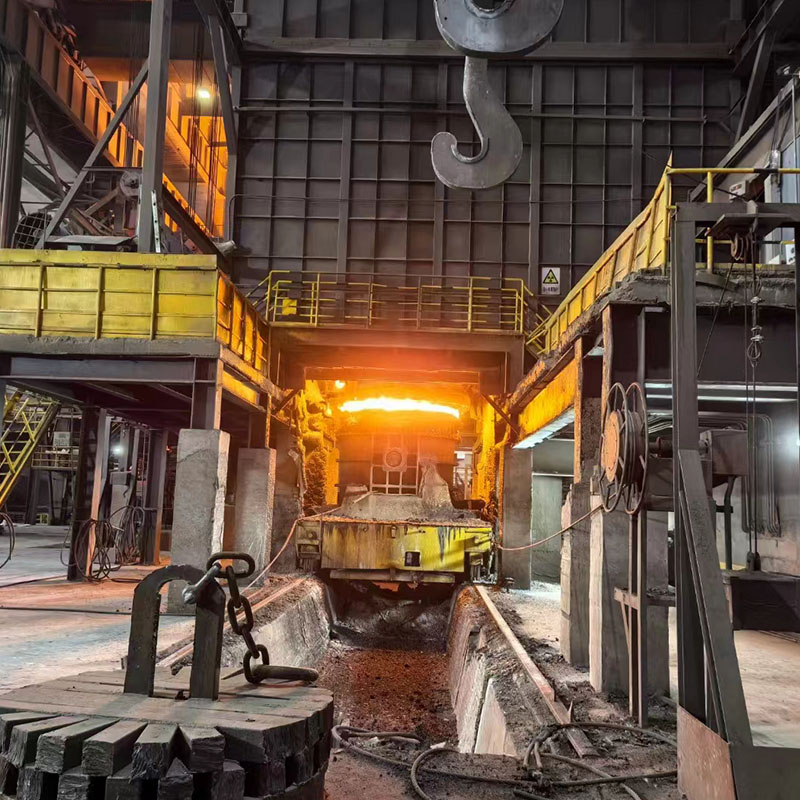
Molten steel loses heat quickly during tapping, transfer and bulk alloy addition, and arc heating makes up for this heat loss. Alternating current through graphite electrodes creates high-temperature arcs that deliver heat directly into the steel bath. Operators need accurate casting temperature to avoid steel leakage or nozzle blockage in continuous casting; even a small temperature drop may cause premature solidification inside the tundish. Submerged arc heating is the standard method: workers form a thick foamy slag layer on the molten steel, and electrodes strike arcs under this slag. This way heat stays inside the bath for higher efficiency and shields ladle refractories from strong radiation damage. Poor foamy slag will expose the arc and rapidly burn the bricks above the slag line.
Strict steel chemical targets need precise alloy control. The refining station maintains a low-oxygen environment for both bulk and micro-alloying. Bulk alloys such as ferromanganese and ferrosilicon are automatically fed from overhead bins. This inert atmosphere stops costly alloys from burning away and greatly raises alloy recovery rates. For micro-alloying, cored wire systems push powder-filled steel tubes deep into molten steel. Calcium wire injection is widely used to change the form of non-metallic impurities, turning solid alumina into liquid calcium aluminate. This prevents continuous casting nozzle clogging and improves steel machinability.
Sulfur removal is required to make steel with strong impact resistance and ductility. Desulfurization needs low oxygen levels, high temperature and high-basicity slag. Operators add lime and alumina to make custom synthetic slag, which works like a chemical sponge to capture sulfur from molten steel. Argon stirring from ladle bottom porous plugs generates rising bubbles to mix steel and slag thoroughly, speeding up sulfur transfer. Proper argon flow keeps strong mixing without letting air get into the molten steel.
Non-metallic impurities weaken steel mechanical performance, fatigue resistance and surface quality, and removing these tiny particles is a key task of secondary refining. Argon or nitrogen injected from the ladle bottom produces upward bubbles in molten steel. Rising bubbles stick to oxide and sulfide impurities and carry them to the slag layer, which traps these contaminants. At the final refining stage, low-flow argon provides gentle stirring to float out impurities without disturbing the slag, so the steel reaches high purity before casting.
The LRF heating system determines temperature adjustment speed and efficiency. Transformer capacity is matched to ladle size and heating speed demands; higher-capacity transformers enable faster heating but require a more stable power grid, converting high industrial voltage into high current for electric arc generation. The hydraulic or electric electrode control system rapidly adjusts electrode height in milliseconds, stabilizing the arc amid turbulent argon-stirred molten steel and avoiding excess carbon mixing into the final steel product.
The water-cooled furnace roof tightly seals the ladle to block outside air, preventing oxygen and nitrogen contamination while resisting extreme radiant heat. It reserves standard openings for electrodes, alloy feeding and waste gas discharge. Matched with the plant’s dust removal and exhaust system, it collects fumes, dust and industrial waste gas generated during refining. Precise air draft control eliminates harmful emissions to meet environmental standards, without drawing in cold air that affects refining stability.
Argon bottom stirring is the core of LRF refining, relying on refractory porous plugs at the ladle bottom to deliver inert gas. Directional plugs provide high-speed concentrated airflow, while random porous plugs produce wide, diffused bubbles; asymmetric dual plugs create an eight-shaped mixing flow for uniform steel stirring. The automatic gas valve system adjusts argon flow and pressure in real time: strong stirring boosts desulfurization efficiency, and gentle low-flow stirring achieves clean impurity flotation without slag entrainment.
Modern LRF refining fully adopts automatic operation to replace manual work. Automatic batching and feeding systems precisely weigh and deliver bulk alloys, eliminating human error for accurate steel composition control. Professional wire feeding equipment stably injects alloy cored wire for accurate micro-alloying. The integrated secondary automation system uses predictive modeling and metallurgical data tracking to intelligently calculate power and alloy dosage, reducing material waste and shortening overall refining cycles.
Plant managers need to know whether regular atmospheric refining or vacuum treatment is needed. Atmospheric LRF works well for heating, sulfur removal and impurity separation, but it cannot remove dissolved hydrogen and nitrogen in molten steel. High-performance products such as heavy forgings and sour gas pipeline steel require very low hydrogen content to avoid internal cracking and material brittleness. VD or VOD equipment puts the ladle inside a sealed tank and creates high vacuum. The low pressure pulls hydrogen and nitrogen out of liquid steel. Many high-end factories use both systems: the ladle first goes to LRF for heating and desulfurization, then transfers to vacuum equipment for deep degassing, which brings maximum flexibility for steel production.
CAS-OB chemical heating is an alternative to electric arc heating. In the CAS-OB process, workers place a refractory hood above the argon flow, add aluminum into molten steel and inject pure oxygen. Aluminum oxidation creates strong heat to raise steel temperature. When comparing the two systems, you need to check running costs. Electric arc heating consumes power and graphite electrodes, while CAS-OB depends on aluminum and oxygen. CAS-OB needs lower upfront investment since it does not require large transformers and electrode arms. Still, it creates plenty of alumina impurities, so longer argon stirring is needed to clean the steel. Electric arc heating delivers cleaner heat and more stable temperature control during long holding periods.
Feature / Process | Ladle Refining Furnace (LRF) | Vacuum Degassing (VD) | CAS-OB |
|---|---|---|---|
Heating Method | Electrical Arc (Electrodes) | None (Temperature drops during process) | Chemical (Aluminum Oxidation) |
Primary Function | Heating, Desulfurization, Alloying | Hydrogen/Nitrogen Removal | Rapid Heating, Composition Adjustment |
Operating Pressure | Atmospheric | Deep Vacuum | Atmospheric |
Steel Cleanliness | Excellent (Inclusion flotation) | Superior (Low gas content) | Moderate (Generates alumina inclusions) |
Good secondary refining relies on matched production timing. The ladle furnace must handle the same molten steel weight from the EAF and match the CCM ladle turret capacity; for a 100-ton EAF tap, the LRF needs to process 100 tons of steel plus slag. Engineers calculate buffer and treatment time to keep continuous casting running. The LRF must finish heating, alloying and rinsing faster than casting. For example, if casting one ladle takes 45 minutes, refining should finish within 40 minutes so a ready ladle is always available and casting stops are avoided.
Your steel product types set the equipment requirements. Rebar only needs simple secondary refining, while advanced high-strength steel, API pipeline steel and bearing steel need thorough refining. Plant managers start by checking end-user specs for sulfur and impurity limits. To make ultra-low sulfur steel (below 10 ppm), the LRF needs high argon flow, special basic slag and longer treatment cycles, and the equipment lining must be strong enough to withstand long high-temperature operation without severe refractory damage.
Selecting the right heating speed (°C/min) is key and depends on steel transfer time and alloy amounts. Molten steel loses heat during transport from EAF, and large alloy additions cool the steel bath, so the transformer must supply enough power to recover temperature quickly. Normal heating speeds are 3–5°C per minute, and high-power units can reach 7°C per minute. Operators need to balance fast heating and refractory service life: excessive power creates fierce arc flares that wear slag-line bricks, and stable electrode control plus foamy slag help reduce this erosion.
Installing new LRF equipment in an existing steel workshop needs careful space planning. Three common designs are available: gantry type with roof and electrodes moving over stationary ladles, pivot-roof type with a swingable roof for fixed ladle stands, and ladle-car type where a cart moves ladles into the heating station. The final selection depends on site clearance, which must leave room for overhead cranes, electrode handling and ladle transfer tracks. Poor space planning creates production bottlenecks and safety risks during maintenance.
Installing secondary refining equipment needs large upfront investment. The initial costs cover high-voltage transformers, heavy mechanical frames, automatic wire feeding machines and multi-layer control systems. Factory managers need to prove this investment brings clear operational benefits.
The biggest economic benefit comes from higher EAF output. Moving refining work to the LRF greatly shortens EAF tap-to-tap time. Daily melting batches can rise by up to 20%. Lower tapping temperature cuts power use and slows furnace lining damage. Higher total output and more high-grade steel produced can offset the initial equipment cost.
Operating the LRF creates continuous running costs. Graphite electrodes are a major expense. Electrode consumption per ton of steel depends on arc stability, slag foaming and electrode oxidation. Poor control systems cause electrodes to break often and raise costs.
Refractory service life affects maintenance spending. Long heating cycles and strong basic slag wear down the ladle lining. The slag line area suffers the worst erosion. Factories use high-grade magnesia-carbon bricks for this heavily worn zone. Regular inspection and replacement of porous plugs are also required to avoid stirring failure during refining.
Today’s steelmaking aims to cut carbon emissions. Managers monitor power and inert gas use for every ton of molten steel. Although the LRF uses electricity, optimizing the EAF-to-caster workflow reduces total plant emissions.
Lower tapping temperature and shorter power-on time for primary furnaces reduce total energy consumption. Shorter EAF cycles mean less heat loss through water-cooled walls and exhaust ducts. This optimized production line cuts Scope 1 and Scope 2 emissions and makes steelmaking more energy-saving and sustainable.
Audit your current EAF tap-to-tap times to identify exact secondary heating requirements and potential throughput gains.
Calculate the required transformer MVA rating based on your heaviest alloy addition practices and target heating rates.
Map the physical crane clearances in your melt shop to determine if a gantry, ladle-car, or pivot-roof design fits your layout.
Specify Level 2 automation protocols to ensure seamless data handshakes with your existing continuous caster PLC.
A: An LRF operates at atmospheric pressure to heat steel, adjust chemistry, and remove sulfur using arc heating and basic slags. A Vacuum Degassing (VD) or Vacuum Oxygen Decarburization (VOD) process places the ladle under a deep vacuum specifically to remove dissolved gases like hydrogen and nitrogen, which atmospheric refining cannot achieve.
A: Standard heating rates typically range from 3°C to 5°C per minute. High-powered stations can achieve up to 7°C per minute. The required rate depends on the transport time from the primary furnace, the volume of cold alloy additions, and the sequence timing of the continuous caster.
A: It ensures the liquid steel arrives at the continuous caster at the exact required temperature and chemical composition. By injecting calcium wire and floating out non-metallic inclusions, it prevents nozzle clogging in the tundish and eliminates surface defects or internal cracking in the final cast product.
A: Ladles require high-performance refractory bricks to withstand basic slags and intense arc radiation. The slag line typically uses premium magnesia-carbon (MgO-C) bricks for maximum corrosion resistance. The bottom and lower sidewalls often use high-alumina or alumina-magnesia-carbon bricks to handle the mechanical wear of argon stirring.
A: Yes, they are frequently retrofitted into brownfield sites. Engineers customize the structural footprint using pivot-roof, gantry, or ladle-car designs to fit within existing crane clearances and floor layouts. Phased installation during scheduled maintenance shutdowns minimizes disruption to ongoing melt shop production.
A: Argon gas is injected through porous refractory plugs located in the bottom of the ladle. This creates a rising plume of bubbles that kinetically mixes the liquid steel. Vigorous stirring promotes desulfurization by pushing steel into the basic slag, while gentle stirring floats non-metallic inclusions to the surface.