Views: 0 Author: Site Editor Publish Time: 2026-07-21 Origin: Site


The selection of a continuous casting machine dictates the metallurgical limits of a steel plant and its fundamental structural engineering. Plant engineers and metallurgists balance the demand for defect-free, crack-sensitive steel grades against severe capital expenditure and facility height constraints inherent to casting infrastructure. Resolving this conflict requires a rigorous technical evaluation of the two dominant architectures. This guide breaks down the engineering realities, metallurgical outcomes, and implementation trade-offs of a vertical vs curved continuous caster to support final procurement and facility design decisions. We will examine the mechanical realities on the shop floor, the behavior of liquid steel during solidification, and the civil engineering footprint required for installation.
Metallurgical Limits: Vertical continuous casters eliminate bending and straightening stresses, making them mandatory for highly crack-sensitive, high-alloy, and heavy-plate steel grades.
Universal Grade Compatibility: Vertical casting represents a "universal" solution capable of casting virtually any steel grade, whereas curved casters have strict metallurgical limits.
Infrastructure Costs: Curved (bow-type) continuous casters require significantly less vertical clearance, drastically reducing civil engineering CAPEX and facility footprint compared to vertical machines.
Production Speed: Curved casters generally support higher casting speeds and continuous throughput for commercial steel grades, whereas vertical casters prioritize internal structural integrity and shell uniformity over raw speed.
Decision Driver: The choice ultimately hinges on the specific product mix (commodity vs. specialty grades) and the physical limitations of the existing or planned melt shop infrastructure.
Table of Contents
Defining the acceptable threshold for internal cracks, macro-segregation, and surface defects remains the primary step based on the target product mix. Micro-alloyed steels demand pristine internal structures, while standard rebar forgives minor imperfections. You must evaluate the specific metallurgical demands before selecting an architecture. The physical behavior of the solidifying shell under mechanical stress dictates what you can and cannot produce. If your plant intends to cast heavy plates for offshore wind monopiles or pressure vessels, the internal soundness of the slab is non-negotiable. Any centerline segregation or internal cracking will lead to immediate rejection during ultrasonic testing.
Establishing the hard limits for plant height or excavation depth directly influences the feasibility of either machine type. Tower construction requires massive vertical clearance, while pit construction demands extensive excavation. These factors dictate the associated civil engineering budgets and construction timelines. When you dig a 30-meter pit for a vertical machine, you immediately encounter water table management, retaining wall design, and complex foundation pouring. If you build upward, the structural steel required to support a ladle turret, tundish, and mold oscillating table at 40 meters above ground level requires massive reinforcement against dynamic loads and vibration.
Evaluating the required casting speed, turnaround times, and overall tonnage expectations ensures commercial viability. High-volume operations prioritize speed and continuous flow. Slower, specialized production focuses on maximizing yield per cast without compromising internal quality. You need to calculate the metallurgical length required for your target casting speed. The metallurgical length is the distance from the meniscus in the mold to the point where the strand is completely solid. If you cast faster, the liquid core extends further down the machine.
Assessing the need to cast large strand sizes, thick slabs, or specific billet dimensions dictates mechanical limits. Massive cross-sections resist bending forces and demand straight pathways. Smaller formats offer greater flexibility in machine design without compromising internal quality. A 400mm thick slab behaves entirely differently than a 150mm square billet when subjected to bending rolls. The strain at the solid-liquid interface increases with the thickness of the strand.
Analyze the historical defect rates of similar grades cast on curved machines to determine if bending strain is a limiting factor.
Conduct a geotechnical survey of the proposed melt shop site to determine the depth of the bedrock and the water table level.
Calculate the required metallurgical length based on the maximum desired casting speed and the thickest strand format.
Map out the material handling logistics for extracting the cast product from the discharge roller table.
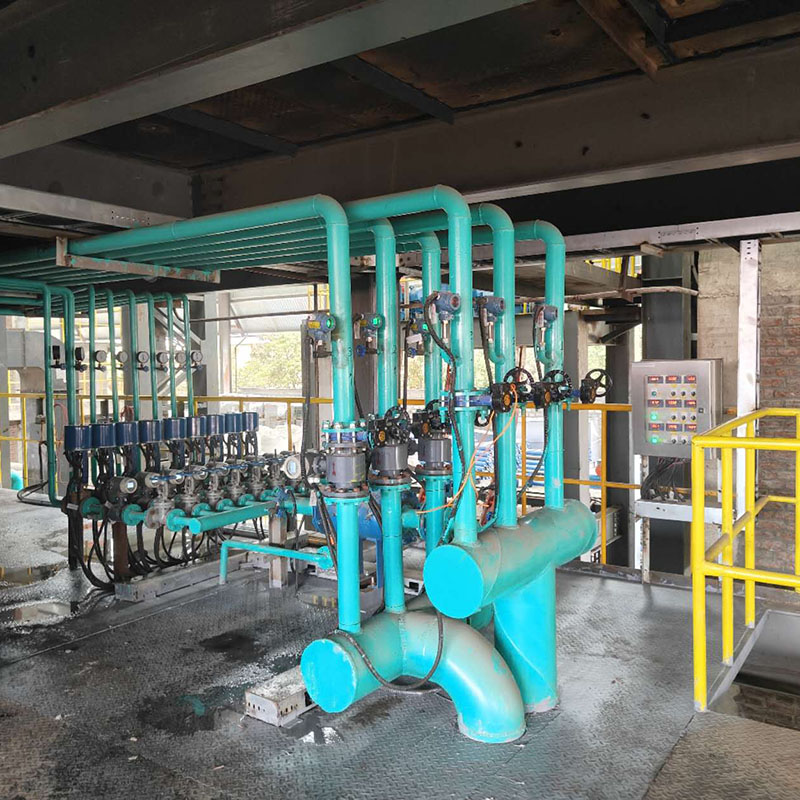
Vertical machines feature a straight mold, straight secondary cooling zone, and straight cutting mechanism. The strand is guided and cooled vertically downward without experiencing mechanical bending or unbending forces. Symmetrical cooling dynamics ensure even shell growth on all four sides of the strand, drastically lowering the risk of strand breakouts. This architecture features a well-established, straightforward design with fewer complex mechanical alignment parts, bending roll segments, or tension-straightening control systems. The absence of bending rolls means that the containment grid only needs to counteract the ferrostatic pressure of the liquid steel, rather than applying mechanical force to change the strand's direction.
These machines excel in the production of high-alloy steels, peritectic grades, and heavy plates that are highly prone to internal cracking. They handle exceptionally large strand sizes where any mechanical bending would cause catastrophic structural failure. Serving as a future-proof installation, they offer plants the ability to cast virtually any developed steel grade without structural modifications. When casting peritectic grades, the uneven shrinkage of the solidifying shell in the mold creates localized air gaps, reducing heat transfer and causing thin spots in the shell. A vertical machine's symmetrical cooling helps mitigate the risk of these thin spots rupturing.
Vertical casting requires massive vertical clearance, often 30 to 40 meters, necessitating expensive high-bay buildings or deep underground pits. They suffer from lower maximum casting speeds due to the limited length of the vertical cooling zone before the cutting sequence. Furthermore, they introduce higher complexity in handling, lifting, and extracting the cut product safely at extreme heights or depths. If you cut a 10-meter slab at the bottom of a 30-meter pit, you need a heavy-duty lifting mechanism to bring that slab up to the ground-level rolling mill. This lifting cycle often becomes the bottleneck of the entire casting operation.
Component | Vertical Caster Characteristic | Operational Impact |
|---|---|---|
Mold | Straight, vertical alignment | Symmetrical initial shell formation, uniform heat extraction. |
Secondary Cooling | Straight vertical spray zones | Even cooling on all faces, preventing thermal distortion. |
Containment Rolls | Straight alignment, no bending | Zero mechanical strain on the solidifying interface. |
Discharge | Vertical cutting and lifting | Requires complex vertical extraction machinery. |
Inclusion Behavior | Float directly up to meniscus | Superior internal cleanliness, inclusions absorbed by slag. |
Curved casters utilize a curved mold, a curved cooling zone, and a straightening mechanism before the cutting torch. The strand is guided through a defined radius, allowing the machine to transition from vertical to horizontal. Liquid steel is subjected to gravitational forces that cause inclusions to accumulate near the inner radius shell, which cools at a different rate than the outer radius shell. The bending radius is a critical design parameter. A smaller radius reduces the machine height but increases the strain on the strand. A larger radius reduces strain but requires a taller building.
They dominate the high-volume production of commercial-grade billets, blooms, and slabs. These machines fit perfectly into facilities with strict height restrictions or brownfield upgrades where vertical expansion is physically or financially impossible. The horizontal discharge allows the cast product to flow directly onto a run-out table and into a reheat furnace or rolling mill without any vertical lifting. This continuous horizontal flow is the foundation of modern high-speed steel production.
Mechanical stress introduced during the bending and straightening phases increases the risk of internal and surface cracks. Uneven solidification patterns require precise secondary cooling spray controls to prevent localized weaknesses. They remain unsuitable for certain crack-sensitive steel grades that cannot withstand the strain of the unbending process. When the strand is unbent from the curved radius to the horizontal plane, the inner radius is subjected to tension, and the outer radius is subjected to compression. If the steel is in a brittle temperature range during this unbending, transverse surface cracks will propagate.
Implement dynamic soft reduction to compensate for centerline segregation caused by the curved profile.
Install electromagnetic stirrers in the mold and the secondary cooling zone to break up dendritic structures and improve homogeneity.
Calibrate the secondary cooling sprays to maintain the strand surface temperature outside of the ductility trough during the unbending phase.
Utilize multi-point unbending profiles to distribute the mechanical strain over several roll segments rather than a single point.
Vertical machines offer superior inclusion flotation, as inclusions rise straight up to the meniscus to be absorbed by mold slag, and zero bending strain makes them ideal for zero-defect policies. Curved machines remain prone to inclusion accumulation on the inner radius and require advanced electromagnetic stirring and multi-point straightening to mitigate quality drops. The trajectory of non-metallic inclusions in the liquid pool dictates the internal cleanliness of the final product. In a straight vertical machine, the buoyancy force drives the inclusions directly upward. In a curved machine, the inclusions hit the solidifying shell on the inner radius and become trapped, creating a band of dirty steel.
In vertical systems, symmetrical heat transfer leads to highly uniform shell thickness, providing maximum resistance against breakout accidents. Curved systems experience asymmetrical heat transfer between the inner and outer radii, requiring complex spray-cooling calibration to maintain shell integrity. The ferrostatic pressure pushes the liquid steel against the outer radius, increasing contact with the containment rolls and altering the heat transfer coefficient. The inner radius tends to pull away from the rolls, creating an air gap that insulates the shell and retards solidification.
Vertical installations demand exponentially higher civil engineering costs, requiring specialized structural tower supports or deep pit excavations and complex material handling logistics. Curved designs feature low-headroom configurations that significantly reduce building costs, simplify foundation requirements, and utilize standard industrial plant heights. The structural steel tonnage required for a vertical caster tower is massive. The tower must support the weight of the ladles, the tundish, the mold, and the entire containment grid, while resisting the dynamic forces of the mold oscillator and the thermal expansion of the equipment.
Vertical machines present difficult maintenance access due to extreme verticality, incurring higher costs for specialized safety and lifting equipment during roll segment replacement. Curved machines provide horizontal discharge and a lower overall profile, allowing for easier, safer access to segments, rollers, and cooling sprays, reducing operational downtime. When a breakout occurs on a vertical machine, the liquid steel falls straight down the containment grid, destroying hoses, cables, and sensors along the entire vertical drop. Cleaning up a breakout in a 30-meter pit is a dangerous and time-consuming operation.
Vertical speed is physically constrained by the vertical drop distance required for complete solidification before cutting. Curved systems utilize extended horizontal run-out tables that allow for longer metallurgical lengths, enabling higher casting speeds and greater throughput. If you want to cast faster on a vertical machine, you must dig a deeper pit or build a taller tower to accommodate the extended liquid core. On a curved machine, you simply extend the horizontal containment grid along the floor of the melt shop.
Evaluation Criteria | Vertical Caster | Curved Caster |
|---|---|---|
Internal Cleanliness | Excellent (inclusions float up) | Moderate (inclusions trap on inner radius) |
Crack Susceptibility | Very Low (no bending strain) | Higher (strain during unbending) |
Civil Engineering Cost | Very High (deep pits or tall towers) | Low (standard industrial buildings) |
Maintenance Access | Difficult (requires vertical lifting) | Easier (horizontal layout) |
Maximum Casting Speed | Limited by vertical height | High (extendable horizontal length) |
Product Mix Flexibility | Universal (all grades) | Limited by strain tolerance |
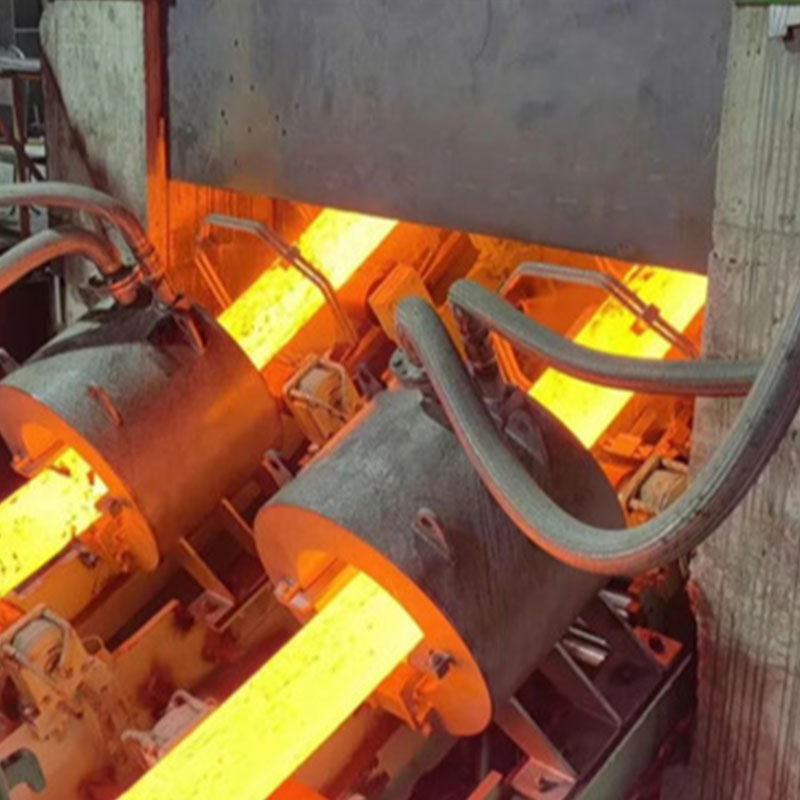
High rejection rates for sensitive grades occur due to unbending cracks. Implementing multi-point unbending profiles and dynamic soft reduction minimizes strain at the solidifying interface. Multi-point unbending gradually transitions the strand from the curved radius to the horizontal plane using a series of rolls with increasing radii. This distributes the tensile strain over a larger area, keeping the peak strain below the critical threshold for crack formation. Dynamic soft reduction applies a calculated taper to the containment rolls near the end of the metallurgical length, squeezing the strand to compensate for solidification shrinkage and preventing centerline porosity.
Budget overruns and extended construction timelines plague deep excavation or tower sway projects. Conducting exhaustive geotechnical surveys prior to design and utilizing modular construction for vertical segments mitigates these risks. If you hit bedrock or an underground aquifer while excavating a caster pit, your civil engineering costs will skyrocket. You must drill core samples at the exact location of the proposed pit to understand the soil mechanics. For tower construction, wind loads and crane vibrations must be factored into the structural engineering model to prevent the mold from oscillating off-axis.
Locking the plant into a curved caster architecture prevents future expansion into high-margin, specialty steel markets. Evaluating vertical-bending casters as a hybrid compromise provides a solution if pure vertical is financially unviable. A vertical-bending machine features a straight mold and a straight vertical section of 2 to 3 meters before the bending rolls begin. This allows the largest inclusions to float up to the meniscus before the strand is curved, improving internal cleanliness while still maintaining a lower overall machine height than a pure vertical caster.
Specify the exact steel grades and their chemical compositions to the equipment manufacturer to ensure the bending radius is appropriate.
Design the secondary cooling water system with variable frequency drives to allow precise control over the spray intensity on the inner and outer radii.
Install real-time thermal mapping sensors below the mold to detect uneven shell growth and prevent breakouts.
Plan the maintenance schedule around the replacement of the unbending roll segments, as these experience the highest mechanical wear.
Ensure the run-out table is long enough to accommodate the maximum expected metallurgical length at the highest casting speed.
Auditing your equipment needs requires a comprehensive analysis of steel grades, budget constraints, and site geometry. Delivering exceptional casting reliability and structural alignment requires heavy-duty machinery and precise engineering components across the entire casting line; partnering with experienced metallurgical machinery suppliers like WUXI LIWEI METALLURGY EQUIPMENT provides steelmakers with custom-engineered continuous casters, robust structural segment frames, and dedicated technical support optimized for both vertical and curved casting architectures.
Audit your projected product mix to determine the exact metallurgical purity levels required by your end-users.
Execute a site-specific civil engineering feasibility study to accurately forecast the infrastructure requirements and foundation costs.
Calculate the required metallurgical length based on your target casting speeds and maximum strand dimensions.
Design the material handling logistics for the discharge area to prevent bottlenecks in the production flow.
A: A vertical caster keeps the steel strand completely straight from mold to cutting, eliminating bending stress. A curved caster bends the strand into a horizontal plane, reducing the machine's height but introducing mechanical stress during straightening.
A: Because there is no bending or unbending process, the solidifying steel shell is not subjected to tensile or compressive strains, preventing internal and surface cracks in sensitive alloys.
A: Vertical casters require massive vertical clearance, drastically increasing civil engineering costs. Curved casters have a low-headroom design, making them cheaper and easier to install in standard industrial buildings.
A: Yes, for most commercial and many advanced grades. Modern curved casters use multi-point unbending, electromagnetic stirring, and dynamic soft reduction to minimize defects, though they still cannot match vertical casters for the most sensitive heavy plate grades.
A: It is a hybrid design featuring a straight mold and a vertical cooling section to allow inclusions to float up, followed by a bending section to transition the strand horizontally. It offers a compromise between the high quality of vertical casting and the lower height of curved casting.
A: Very large strand sizes are highly resistant to bending and are prone to severe cracking if straightened. Therefore, large strand sizes almost exclusively require vertical continuous casting machines.