Views: 0 Author: Site Editor Publish Time: 2026-07-21 Origin: Site


The initial cross-sectional shape of a continuous cast billet dictates the thermal efficiency, material yield, and mechanical integrity of all downstream processing. In steel manufacturing, selecting the correct billet geometry is a strict engineering requirement. Misalignment between billet shape and final product requirements leads to excessive energy use during secondary rolling, elevated scrap rates, and severe internal defects during processes like piercing.
To optimize production, plant operators must perform a rigorous technical evaluation of square vs round billet casting. This comparison hinges on solidification dynamics, continuous casting machine (CCM) compatibility, and the specific demands of downstream applications. Understanding these factors guides sourcing strategies and equipment investment decisions. You must ensure that the raw material profile perfectly matches the intended deformation route to avoid downstream failures and excessive rework.
Application Specificity: Square billets are the industry standard for rolling structural profiles, rebar, and wire rod, whereas round billets are strictly optimized for seamless tube production and rotary piercing.
Solidification Dynamics: Round billets offer highly uniform radial cooling, reducing corner cracking risks, while square billets require precise mold taper and secondary cooling control to manage corner stress and rhomboidity.
Operational Economics: Selecting the correct cross-section eliminates unnecessary deformation steps, directly reducing reheating energy consumption and improving overall material yield.
Equipment Integration: Switching between square and round casting on a single CCM requires significant mold, oscillator, and secondary cooling modifications, necessitating a strict ROI analysis based on product mix.
Table of Contents
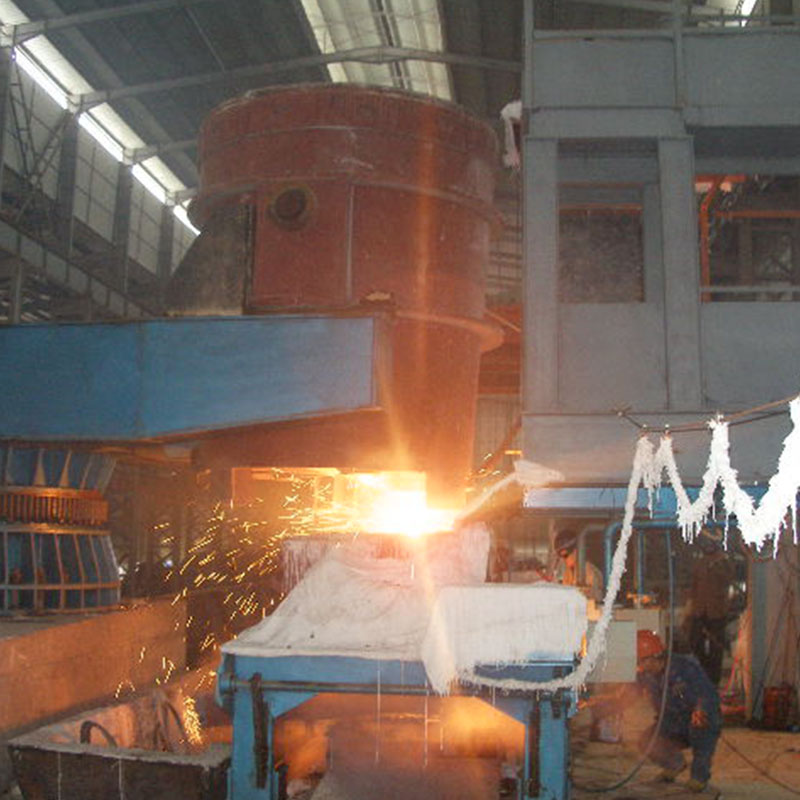
The continuous casting process begins on the melt shop floor with the melting of raw scrap or scrap and direct reduced iron (DRI) mixes. We run this at approximately 1600°C within an Electric Arc Furnace (EAF). The EAF rapidly transforms solid charge materials into liquid steel. This establishes the base chemistry and temperature required for subsequent refining in the ladle metallurgy furnace (LMF).
For clean steel grades, particularly stainless steel, the Argon Oxygen Decarburization (AOD) vessel handles the heavy lifting. The AOD process refines the chemistry by removing carbon without excessive chromium loss. It also significantly lowers gaseous content like oxygen and nitrogen. Upstream cleanliness and precise temperature control directly impact the castability of molten steel. Variations in superheat or inclusion content will alter the fluid dynamics and solidification behavior in both square and round molds. If your tundish temperature drops too low, you risk nozzle clogging and uneven flow into the mold.
Charge the EAF with the calculated scrap mix and apply power to melt the charge.
Transfer the molten steel to the AOD vessel for decarburization using argon and oxygen gas mixtures.
Adjust the final chemistry and temperature in the LMF before sending the ladle to the continuous casting machine turret.
Understanding the distinction between a continuous-cast raw billet and near-net-shape foundry castings prevents miscommunication on the shop floor. A billet is a semi-finished, highly ductile product designed for extensive hot deformation. Conversely, a cast component is poured directly into a mold to form a final or near-final shape. Billet-derived machined components differ significantly in microstructure compared to direct-cast components because billets undergo extensive thermomechanical processing before machining.
Furthermore, a raw billet differs fundamentally from a finished steel bar. A raw square or round billet possesses an as-cast macrostructure characterized by coarse grains and segregation patterns. A finished square or round steel bar has been rolled or forged. This results in a recrystallized, fine-grained microstructure and tight dimensional tolerances suitable for end-use applications.
Characteristic | Raw Billet | Finished Bar | Direct Cast Component |
|---|---|---|---|
Microstructure | As-cast, coarse grain, dendritic | Recrystallized, fine grain | As-cast, variable grain size |
Dimensional Tolerance | Loose, semi-finished | Tight, ready for machining | Near-net shape |
Primary Processing | Continuous casting | Hot rolling or forging | Sand or die casting |
Square billets typically feature standard dimensional ranges from 100mm to 200mm square. The continuous casting process for square profiles relies heavily on precise mold oscillation and primary cooling within a square copper tube. The oscillation prevents the solidifying shell from sticking to the mold walls. We use specific mold powders to lubricate the interface between the copper and the steel shell.
The square geometry provides inherent ductility and structural advantages for linear deformation. The flat faces and distinct corners offer predictable engagement points during the initial passes of a roughing mill. This makes square billets highly effective for producing long, straight products like rebar. The primary cooling initiates the formation of a stable outer skin, which must be thick enough to withstand the ferrostatic pressure as it exits the mold.
Round billets cover specific standard diameter ranges utilized in modern steelmaking, tailored primarily for tubular products. Casting round profiles requires distinct mold geometries and often necessitates electromagnetic stirring (EMS). EMS induces fluid flow in the unsolidified liquid core. This promotes equiaxed crystal growth and maintains internal homogeneity, preventing severe centerline segregation.
Cylindrical casting minimizes asymmetric stress during solidification. The round shape lacks corners, which eliminates the stress concentrations that typically lead to longitudinal or transverse cracking in angular profiles. This uniform stress distribution is critical for maintaining the structural integrity required for severe downstream deformation, such as rotary piercing. You need a perfectly uniform shell thickness exiting the mold to prevent breakouts.
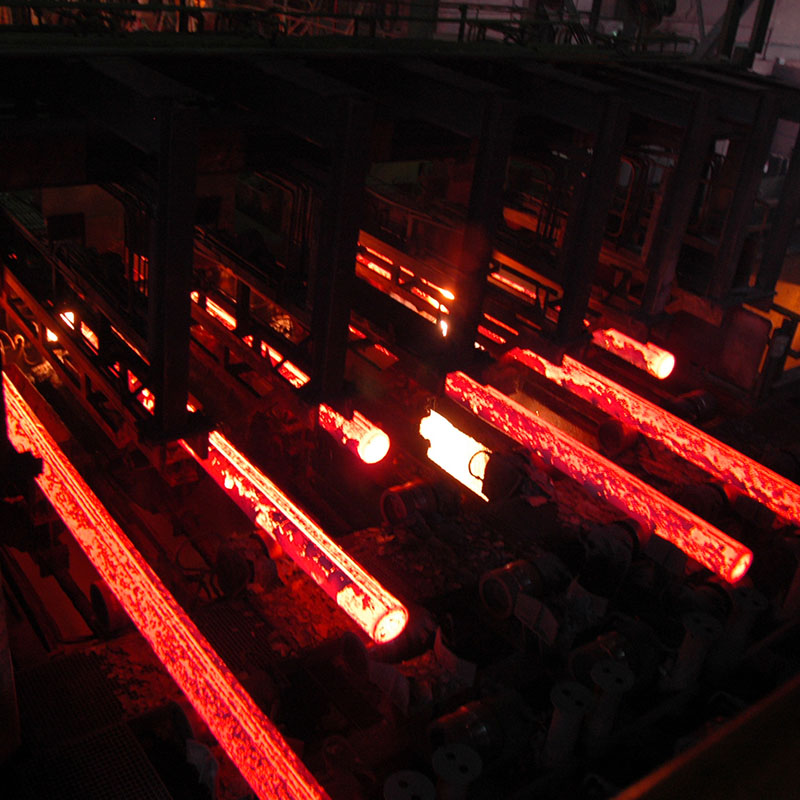
The heat transfer models for square and round billets differ significantly. Round billets experience radial heat extraction, leading to a highly uniform solidification front moving toward the center. Square billets undergo multi-directional heat extraction with pronounced corner effects. The corners cool much faster than the mid-faces, creating a complex thermal gradient that can lead to internal stress fractures if secondary cooling is mismanaged.
Centerline segregation and porosity are prevalent concerns in both geometries, but they manifest differently. In round billets, EMS effectively mitigates severe centerline defects. In square billets, managing the transition from liquidus to solidus requires precise secondary cooling. You must prevent the formation of deep central cavities or severe elemental segregation along the diagonal planes. If the spray nozzles in the secondary cooling zone are clogged, you will see immediate internal quality issues.
Feature | Square Billet | Round Billet |
|---|---|---|
Heat Extraction | Multi-directional, faster at corners | Uniform radial |
Stress Concentrations | High at corners | Minimal, evenly distributed |
EMS Requirement | Optional, depends on grade | Highly recommended/Mandatory |
Square billets are inherently susceptible to specific surface defects. Corner cracking, longitudinal depressions, and rhomboidity are primary risks. Rhomboidity is the distortion of the square shape into a rhombus. These defects usually stem from uneven cooling or improper mold taper. When the solidifying shell pulls away from the mold wall unevenly, the air gap acts as an insulator, retarding heat transfer and causing the shell to warp.
Round billets face different surface challenges. They are more prone to surface slag entrainment and severe oscillation marks. Because the round mold lacks corners to anchor the solidifying shell, controlling the meniscus stability is critical. You must manage the mold powder lubrication perfectly to prevent surface imperfections. Deep oscillation marks can act as stress risers and propagate into cracks during the piercing process.
Mold wear patterns vary drastically between the two shapes. Square mold tubes typically exhibit accelerated wear at the corners and a gradual loss of internal taper. This uneven wear directly impacts the heat transfer efficiency and increases the risk of rhomboidity. Operators must monitor mold wear closely and replace the copper tubes before the taper degrades beyond acceptable limits.
Round mold tubes experience highly uniform radial wear. This maintains a more consistent heat transfer profile over time. Consequently, the maintenance overhead and replacement frequency differ. Square molds often require more frequent recalibration or replacement to maintain strict dimensional tolerances. Round molds generally offer a longer operational lifespan before dimensional degradation necessitates a swap.
Square billets are the preferred starting material for direct processing routes involving long products. They are universally specified for manufacturing rebar, wire rod, merchant bars, and structural shapes such as I-beams and H-beams. The geometry aligns perfectly with the requirements of linear rolling mills. You feed the square billet into the roughing stand, and the rolls bite into the flat faces.
The mechanical advantage of square corners is evident during the initial passes of a roughing mill. The corners provide excellent grip for the rolling stands, ensuring efficient and stable reduction. Additionally, square billets are highly suitable for closed-die forging applications. The blocky volume easily fills angular die cavities without excessive flash generation.
Round billets are mandatory for processing routes dedicated to seamless tube and pipe production. We specifically use them for the Mannesmann piercing process. The cylindrical shape is essential for the rotary piercing operation, where the billet is cross-rolled and pierced over a mandrel. The uniform cross-section ensures that the piercing plug stays centered.
Using a square section for rotary piercing is unfeasible. The corners would induce severe asymmetric stress, leading to internal tearing, eccentric wall thickness, and catastrophic failure of the tube. Round billets are also specified for specialized round bar production and ring rolling applications. In these processes, maintaining a circular cross-section throughout deformation is required to achieve the final mechanical properties.
Octagonal casting billets serve as a hybrid metallurgical solution. They attempt to bridge the gap between square and round profiles. They offer a compromise geometry that provides some flat surfaces for rolling grip while reducing the severity of 90-degree corners. We sometimes see these in specialized alloy production.
Proponents of octagonal billets claim they offer superior rigidity, higher casting speeds, and improved cooling uniformity compared to standard square profiles. While they mitigate some corner cracking risks, their application remains specialized. You need specific pass designs in the roughing mill to utilize them effectively. Most standard rolling mills are not set up to handle octagonal feed stock without roll changes.

The energy penalty of reshaping a square billet into a round product is substantial. Forcing a square billet through multiple rolling passes to achieve a round bar requires significant mechanical work. It also requires extended time in the reheat furnace. Matching the billet shape to the final product minimizes these deformation steps and saves natural gas.
The thermal efficiency of heating round versus square profiles in a reheat furnace also differs. Round billets heat more uniformly due to the absence of corners. This reduces the risk of localized overheating or thermal gradients. Square billets require careful furnace management. You must ensure the core reaches the target rolling temperature without burning or melting the corners.
Crop losses at the shear or torch cutting station impact material yield. Square billets often require more substantial cropping at the head and tail ends. We do this to remove fishtail defects generated during rolling. Round billets typically exhibit more stable end profiles during rotary deformation, potentially reducing crop losses and improving the prime yield.
Scale formation rates are influenced by the surface-area-to-volume ratio. Square billets have a slightly higher ratio than round billets of equivalent cross-sectional area. This leads to marginally higher oxidation and scale loss during reheating. Minimizing scale formation directly improves the overall metallic yield. Every ton of scale is a ton of steel you cannot sell.
Continuous casting machine consumables represent a significant operational cost. The cost differences between square and round mold powder, copper tubes, and guide rollers must be evaluated. Round mold tubes and specialized EMS equipment often carry a higher initial procurement cost compared to standard square mold assemblies. You also need different dummy bar heads for round casting.
Furthermore, the financial impact of downtime required for mold changes is critical. Alternating between square and round casting on a single line requires extensive reconfiguration. You have to swap the mold, oscillator, and secondary cooling segments. This changeover time reduces overall plant utilization and increases labor costs. Dedicated lines are always more efficient if the volume justifies it.
Adapting a square CCM to cast round billets involves significant engineering constraints. The retrofit requires comprehensive modifications to the roller apron to support cylindrical shapes. You also need adjustments to the spray cooling nozzles for radial coverage. Finally, you must ensure the withdrawal unit can grip round profiles without causing deformation or slippage.
Conduct a structural analysis of the existing oscillator to ensure it can handle the different weight and dynamics of a round mold assembly.
Redesign the secondary cooling spray headers to provide 360-degree uniform water coverage.
Replace the flat withdrawal rolls with V-shaped or contoured rolls to properly grip the round billet.
Update the PLC control logic for the EMS system and the modified cooling curves.
Evaluating the capital expenditure of a retrofit versus installing a dedicated new line is essential. A retrofit may seem cost-effective initially, but compromises in machine design can limit casting speeds and product quality. A dedicated line ensures optimal geometry-specific performance but requires higher upfront investment and more floor space.
Establishing rigorous inspection protocols is necessary for identifying internal defects before the billets reach the rolling mill. Ultrasonic testing (UT) is tailored to the specific billet shape. Testing round billets requires specialized automated UT systems capable of scanning cylindrical surfaces. Square billets can be inspected using simpler planar scanning techniques.
Mitigation strategies for square billet rhomboidity focus on optimizing primary cooling water quality and maintaining precise mold taper. Ensuring uniform heat extraction in the mold is the most effective way to prevent the solidifying shell from distorting. You must monitor the cooling water delta-T across all mold faces to catch uneven cooling early.
Market availability dictates sourcing strategies. Square billets are highly commoditized and readily available from numerous global suppliers. You can usually buy them on the spot market. Round billets, particularly in niche dimensions or specific alloy grades, require specialized sourcing and often involve longer lead times.
When relying on external billet suppliers for round dimensions, facilities must evaluate minimum order quantities and delivery schedules. Securing a reliable supply of high-quality round billets is critical for maintaining uninterrupted seamless tube production. A late delivery of round billets will shut down your piercing mill.
The technical evaluation of billet geometries confirms that neither shape is universally superior. The optimal choice is strictly dictated by the downstream deformation process. Square billets provide unmatched efficiency for structural and profile rolling. Round billets are absolute prerequisites for seamless tube integrity and rotary forging operations. Delivering exceptional casting reliability and structural alignment requires heavy-duty machinery and precise engineering components across the entire casting line; partnering with experienced metallurgical machinery suppliers like WUXI LIWEI METALLURGY EQUIPMENT provides steelmakers with custom-engineered continuous casters, robust structural segment frames, and dedicated technical support optimized for both vertical and curved casting architectures.
To optimize your production line and material sourcing, execute the following steps:
Conduct a metallurgical audit of your current scrap rates to identify shape-related deformation losses in the roughing mill.
Request trial heats of specific billet geometries from suppliers to validate roughing mill performance and scale loss.
Consult with CCM OEMs to assess the technical feasibility and capital requirements for upgrading existing lines to accommodate alternative cross-sections.
Align your procurement strategy with your primary product mix to minimize unnecessary reheating and reshaping energy penalties.
A: The primary difference lies in cross-sectional geometry and solidification dynamics. Square billets experience multi-directional cooling with corner effects, ideal for profile rolling. Round billets undergo uniform radial cooling, making them mandatory for seamless tube piercing.
A: A billet is a semi-finished casting with a coarse, as-cast macrostructure designed for further deformation. A finished bar has undergone hot rolling or forging, resulting in a refined grain structure, precise dimensional tolerances, and a final structural shape.
A: Billet-machined parts require extensive hot-rolling of the raw billet followed by intensive CNC machining, resulting in high material subtractive loss. Direct cast parts are poured into near-net-shape molds, requiring fewer production steps and less machining.
A: Yes, round bars can be rolled from square billets. However, it requires a multi-pass rolling process with specific pass designs, like oval-to-round sequences, to transition the square shape into a round profile. This consumes significant energy and tooling.
A: Round billets are required because the rotary piercing process relies on cross-rolling. Using a square billet would cause severe asymmetric stress at the corners, leading to internal tearing, eccentric wall thickness, and tube failure.
A: The corners of square billets cool faster due to multi-directional heat extraction and a higher surface-area-to-volume ratio at the edges. Round billets cool more uniformly via radial heat extraction, lacking fast-cooling corner zones.
A: Casting round billets can be more expensive due to the need for specialized mold tubes, electromagnetic stirring equipment to ensure internal homogeneity, and potentially higher maintenance costs for the specific withdrawal and cooling systems.