Views: 0 Author: Site Editor Publish Time: 2026-11-09 Origin: Site


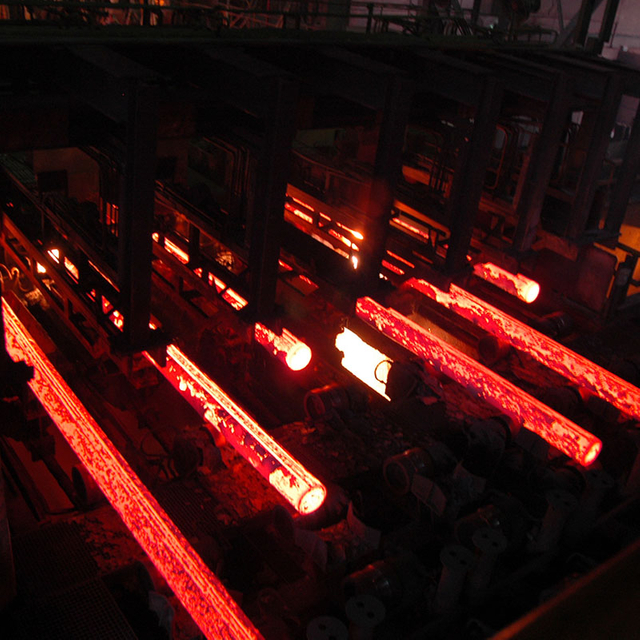
A complete rebar rolling mill equipment list covers more than rolling stands. The line also needs equipment to receive billets, establish the required rolling temperature, guide and cut the material, manage cooling, and prepare finished products for dispatch.
The exact configuration depends on the billet source, product range, production route, capacity target, and delivery format. A mill producing straight rebar does not require the same downstream equipment as a line producing wire rod or coiled rebar.
This guide organizes the equipment by process stage and explains which items need project-specific selection.
Table of Contents
A billet-to-rebar project begins with purchased or internally supplied billets. Melting furnaces, refining equipment, and continuous casting machines belong to the upstream steelmaking and billet-production scope.
They should only appear in the rolling-project quotation when that broader scope is explicitly required.
Similarly, hot charging does not automatically mean that all heating equipment can be removed. Billet temperature, transfer time, chemistry, rolling schedule, and production interruptions determine whether reheating or temperature equalization is needed.
The following is a planning checklist, not a fixed bill of materials. Equipment quantities, locations, and supply responsibilities must be confirmed in the technical proposal.
Process stage | Equipment to consider | Main function or selection point |
|---|---|---|
Billet reception | Charging racks, transfer devices, roller tables, inspection facilities | Receive and position billets for production |
Heating | Reheating furnace or temperature-equalizing equipment | Establish suitable rolling conditions |
Scale removal | Descaling equipment and associated water system | Remove scale where required by the process |
Rough rolling | Roughing stands, rolls, drives, and guides | Begin billet reduction |
Intermediate rolling | Intermediate stands, drives, and guides | Prepare the section for finishing |
Finish rolling | Finishing stands and suitable roll tooling | Form the final section and rib geometry |
Inter-stand coordination | Speed control, guides, and loop or tension equipment where applicable | Maintain stable material flow |
Cropping and dividing | Crop shears, dividing shears, and emergency cutting equipment as specified | Remove unsuitable ends and control product lengths |
Thermal treatment | Quenching and self-tempering equipment where required | Develop the specified thermal treatment route |
Cooling-bed entry | Run-in tables, braking devices, channels, or transfer equipment | Position hot bars for cooling |
Cooling | Cooling bed and its drive and transfer mechanisms | Support and move bars during cooling |
Final-length preparation | Alignment equipment, cold shear, or alternative cutting equipment | Prepare the ordered lengths |
Product handling | Counting, layer forming, collecting, and bundling equipment | Form manageable finished-product bundles |
Identification | Weighing, marking, and labeling facilities | Support dispatch records and traceability |
Utilities | Cooling water, filtration, lubrication, hydraulics, and compressed air as needed | Supply the production equipment |
Electrical and controls | Power distribution, drives, PLCs, HMIs, sensors, and protective systems | Operate and coordinate the line |
Maintenance and quality | Roll-shop facilities, lifting equipment, tools, spares, and testing facilities | Maintain equipment and verify finished products |
Cold billets generally require reheating before hot rolling. The furnace arrangement must match billet dimensions, steel grades, production rate, available fuel or power, and the required temperature distribution.
Pusher and walking beam furnaces have different handling mechanisms and maintenance needs. Neither should be selected solely from a broad label such as “small mill” or “high-quality mill.”
Hot-charged billets may still require temperature equalization or additional heating. Confirm the operating plan for caster interruptions and changes in rolling schedules.
Descaling should also be specified around the actual process. Define its location, water requirements, scale handling, and expected surface condition.
The rolling train progressively reduces and shapes the billet.
Roughing stands perform the initial reductions. Intermediate stands prepare the section for the final passes. Finishing stands produce the required dimensions and deformed-bar geometry.
The number of stands and the pass sequence depend on the incoming billet, finished sizes, steel grades, and rolling arrangement.
Horizontal–vertical layouts can reduce the need for intentional twisting between certain passes. However, horizontal-only arrangements and other layouts remain relevant to particular mill designs.
Select stand construction, roll materials, and drive ratings through engineering calculations. A high-speed finishing block or tungsten carbide roll rings should not be treated as universal requirements for every rebar mill.
LIWEI’s rebar and wire rod rolling mill page provides a starting point for discussing the appropriate rolling configuration.
Motors, gearboxes, couplings, and spindles transmit power to the rolls. Their selection must account for torque, speed range, thermal duty, and transient loading.
Guides direct the material into and out of the passes. Their geometry, alignment, wear condition, and cooling requirements affect rolling stability and surface condition.
Pinch rolls may feed, convey, control, or brake material depending on their location. They do not all serve the same tension-control function.
Where loop or tension control is fitted, it must coordinate with stand speeds and the pass schedule. Overspeeding one section without considering the next can destabilize the line.
Different shears perform different tasks.
Crop shears remove specified head or tail portions. Dividing shears create lengths suitable for downstream handling. Flying shears cut moving material, while emergency cutting functions may be provided through the specified protection arrangement.
After cooling and alignment, a cold shear or another selected cutting system prepares commercial lengths.
Confirm cut section, material temperature, cutting frequency, length tolerance, and blade maintenance requirements. Shear locations and functions must follow the process layout rather than a generic equipment sequence.
Quenching and self-tempering equipment is required when that is the selected production route. It is not mandatory for every rebar grade or manufacturing method.
The cooling system must match steel chemistry, diameter range, rolling speed, entry temperature, and the required finished properties.
The cooling bed performs a different function: it supports and transfers the product while providing cooling time. Its entry equipment, usable positions, cycle rate, and discharge capacity must work together.
A walking beam arrangement can reduce sustained dragging and help maintain product separation. It does not automatically eliminate surface marks or guarantee straightness.
LIWEI’s steel rolling applications include a walking beam cooling bed for steel bars.
Downstream equipment may include bar-end alignment, counting, layer forming, bundle collection, tying, weighing, and labeling.
Define the required bundle size, mass, identification method, and transfer arrangement. Handling equipment should match the product and site conditions; magnetic cranes are not the only possible solution.
Traceability records should connect finished products with the relevant heat, production lot, and inspection results.
Utilities are part of the production system even when supplied under separate contracts.
Clarify cooling-water circuits, filtration, scale collection, lubrication, hydraulic power units, compressed air, electrical distribution, and any process-specific exhaust systems.
Maintenance planning should cover roll and guide preparation, roll changes, lifting capacity, service access, and critical spares.
Quality facilities should support the applicable chemistry, mechanical-property, dimensional, mass-per-length, and rib-geometry checks. Tests may be performed in-house or through an agreed external arrangement.
Provide the billet dimensions, steel grades, rebar sizes, ordered lengths, production shares, and annual working schedule.
Ask for capacity by representative product size. Maximum finishing speed alone does not describe sustained output across the range.
Check the furnace, rolling train, shears, cooling bed, and bundling section on a consistent throughput basis. An upgrade to one machine will not increase production if another section remains the bottleneck.
Wire rod production requires an appropriately designed finishing and downstream route. This can include dedicated finishing equipment, a laying head, controlled cooling, coil reforming, and coil handling.
Coiled rebar may use a different collecting or spooling arrangement.
A combined line therefore requires more than adding a laying head to an existing straight-bar mill. Review the pass design, routing, speed range, cooling, drives, controls, and available space.
LIWEI’s rolling mill equipment can be reviewed when defining the intended product scope.
For every package, identify the supplier, buyer responsibilities, utility interfaces, and exclusions.
Include foundations, site cables, piping, cranes, installation, commissioning materials, training, spares, and documentation in the scope review.
Agree on the test product, input conditions, operating period, output measurement, quality requirements, and energy-consumption boundary before accepting a performance figure.
To discuss a project-specific equipment list, contact LIWEI with your rebar production requirements. Include your billet source, product range, target output, delivery format, and available site information.
The rolling train includes roughing, intermediate, and finishing equipment with rolls, drives, and guides. A functioning line also needs suitable heating, cutting, cooling, handling, controls, and utilities.
Not when it uses purchased billets. A continuous casting machine belongs to the upstream billet-production scope and should be included only when the project requires it.
No. The required equipment depends on the selected metallurgical route and product specification. Quenching and self-tempering is one route, not a universal requirement.
Potentially, if designed or modified for both. The finishing route, cooling, collecting equipment, controls, utilities, and layout must be checked together.
Request an itemized equipment list, technical specifications, layout, utility requirements, scope exclusions, commissioning responsibilities, spare-parts recommendations, and agreed acceptance conditions.