Views: 0 Author: Site Editor Publish Time: 2026-08-17 Origin: Site


Internal defects in continuous casting carry heavy operational penalties. When billet center segregation goes unmitigated, downstream processing fails. Wire rod mills experience high frequencies of wire breakage during drawing operations. Forging facilities face poor internal quality, resulting in components that fail impact testing due to severely reduced low-temperature toughness. These defects directly increase rejection rates and erode plant profitability. High-carbon steel grades are particularly vulnerable. As carbon content increases, the solidification range widens, making the steel highly sensitive to solute redistribution. Uncontrolled centerline segregation creates hard spots of martensite or cementite networks. Meeting strict industry quality standards becomes impossible when the core lacks chemical and mechanical homogeneity. Solving this requires moving beyond basic metallurgical adjustments. Plant operators must integrate thermal interventions like intense secondary cooling with advanced mechanical solutions such as soft reduction and predictive casting technologies to control the solidification profile effectively.
Process Control is the First Line of Defense: Lowering the superheat of molten steel and optimizing the Mn/S ratio are foundational, low-CapEx methods to minimize segregation sensitivity.
Thermal and Mechanical Interventions Drive Deep Results: Intense secondary cooling (hard-cooling) and soft reduction technology are proven, high-impact strategies for minimizing central segregation, particularly in high-carbon steels.
Crystal Structure Dictates Segregation Severity: Controlling the solidification process to manage the ratio of equiaxed to columnar crystals is critical for internal homogeneity and improving low-temperature toughness.
CapEx vs. OpEx Trade-offs: Selecting the right mitigation strategy requires balancing immediate process adjustments against the capital expenditure required for predictive models and continuous casting machine (CCM) upgrades.
Table of Contents
Evaluating internal billet quality requires standardized, repeatable metrics. Plant metallurgists rely heavily on macro-etching ratings and sulfur prints to quantify the severity of internal defects. Operators cut a transverse slice of the cast product, polish the surface, and submerge it in a hot hydrochloric acid solution. The acid attacks solute-rich areas faster than the base steel matrix. This reveals the physical manifestation of solute pooling, showing dark, etched regions at the core where carbon, sulfur, and phosphorus have concentrated.
We grade these resulting dark spots against industry-standard plates, such as ASTM E381. Acceptable levels vary depending on the end application. Structural grades might tolerate minor centerline porosity, but high-carbon and alloy grades demand strict adherence to low segregation scores. A rating of C2 or higher often triggers immediate rejection for tire cord or bearing applications. Success in continuous casting operations means consistently achieving a homogeneous cross-section, eliminating central porosity, and keeping macro-segregation ratings within the tight tolerances specified by downstream clients.
High-carbon steel grades, such as SAE 1070 through 1090, exhibit a wide temperature gap between the liquidus and solidus lines. This extended mushy zone provides ample time for solute elements to migrate away from the solidifying dendrites and into the remaining liquid pool. As this enriched liquid gets pushed to the center of the billet, it forms localized zones with carbon equivalents far exceeding the nominal heat analysis.
When this highly enriched liquid finally freezes, it transforms into brittle microstructures. Depending on the cooling rate, operators will find untempered martensite or continuous grain-boundary cementite networks at the exact center of the billet. These hard spots drastically reduce the ductility of the steel. The billet becomes highly susceptible to central cracking during subsequent hot rolling or thermal treatments. You cannot fix these microstructural anomalies with standard normalizing or annealing cycles; the chemical gradient is permanently locked into the steel.
Defects generated in the continuous casting machine do not disappear during hot rolling. They change shape and propagate. Center segregation in the cast billet elongates into centerline banding in the final rolled rod or bar. This creates severe mechanical mismatches across the cross-section of the product.
Wire Drawing Failures: In wire drawing applications, the hard, brittle centerline band cannot deform at the same rate as the surrounding ferrite-pearlite matrix. This differential ductility leads to internal chevron cracks, eventually causing cuppy breaks and sudden wire ruptures on the drawing block.
Forging Rejections: For forged components, the concentration of phosphorus and manganese at the core severely degrades low-temperature toughness. Parts subjected to dynamic loading or sub-zero operating environments fail impact testing.
Machinability Issues: Hard spots at the core destroy drill bits and cutting tools during deep-hole drilling operations, increasing tooling costs and machine downtime for the end-user.
Catastrophic brittle failures in the field often trace directly back to unmanaged segregation in the original cast billet.
Central segregation is fundamentally driven by solute rejection during the liquid-to-solid phase transformation. Elements like carbon, sulfur, phosphorus, and manganese have a partition coefficient of less than one. They are less soluble in solid steel than in liquid steel. For example, carbon has a partition coefficient of roughly 0.34 in austenite, while sulfur is around 0.05. As dendrites grow from the chilled mold wall inward, they continuously reject these solutes into the adjacent liquid.
During the final stages of solidification, the remaining liquid at the core of the billet becomes heavily enriched. The solid fraction increases, restricting fluid flow and trapping the liquid. When this final liquid freezes, it creates a concentrated band of alloying elements. This forms the classic centerline segregation profile. The severity of this profile depends entirely on how much time the solutes had to migrate and how much liquid was left at the end of the crater.
The temperature profile of the molten steel heavily influences the macrostructure of the cast billet. Casting with excessive superheat—temperatures 35°C to 50°C above the liquidus—delays the nucleation of equiaxed crystals. Instead, high superheat promotes the growth of long, unbroken columnar dendrites that extend deep into the billet core.
These columnar grains form a physical barrier. They bridge across the center of the billet, trapping isolated pockets of highly enriched liquid. Uneven cooling in the secondary zones exacerbates this issue. Asymmetrical thermal gradients cause the solidification front to advance irregularly. This forces solute-rich liquid into concentrated, off-center pools, making mechanical interventions much more difficult to apply effectively.
Mechanical instability in the continuous casting machine directly worsens internal defects. As the billet exits the mold, it has a thin, relatively weak solid shell containing a heavy liquid core. The ferrostatic pressure exerted by this liquid column is immense. If the support rolls in the secondary cooling zone are misaligned, or if the roll pitch is too wide, the solid shell bulges outward between the rolls.
As the billet passes over the next support roll, the machine squeezes it back into shape. This continuous bulging and squeezing creates a mechanical pumping action. Metallurgists refer to this as internal macro-segregation pumping. It draws highly enriched liquid from the upper sections of the strand down into the final solidification zone at the core, massively increasing the concentration of solutes at the centerline.
The cross-sectional shape of the cast product alters heat transfer dynamics and the final segregation pattern. Different geometries require entirely different cooling strategies to maintain internal quality.
Round billets generally experience uniform, symmetrical radial cooling. The heat extracts evenly in all directions, creating a flat solidification front that pushes solutes toward a diffuse, central area. Square billets present a much harder challenge. The corners of a square billet cool much faster than the mid-faces due to two-dimensional heat flow. This leads to a complex, non-uniform solidification front. The rapid corner freezing pushes solutes toward the exact geometric center, resulting in a highly concentrated, star-shaped segregation pattern. Managing billet center segregation in square formats requires highly optimized corner-to-face cooling ratios to maintain even shell growth.
Controlling the initial state of the molten steel is the most cost-effective method for managing internal quality. High superheat is the primary enemy of a homogeneous internal structure. By reducing the superheat to a tight target range—typically 15°C to 25°C above the liquidus temperature—operators suppress the aggressive growth of columnar dendrites.
Low-superheat casting encourages the early nucleation of equiaxed grains in the liquid core. A high ratio of equiaxed crystals acts like a sponge. It evenly distributes the rejected solutes across a wider central area rather than allowing them to pool into a single, concentrated centerline.
Chemical composition adjustments also play a critical role. Operators must strictly control the Manganese-to-Sulfur (Mn/S) ratio to prevent hot shortness and central cracking. Sulfur strongly segregates to the center and forms low-melting-point iron sulfides (FeS). These sulfides remain liquid at grain boundaries, causing the steel to tear under thermal or mechanical stress. By maintaining a high Mn/S ratio—often greater than 25:1 or 30:1 depending on the grade—sulfur preferentially combines with manganese to form stable manganese sulfides (MnS). These precipitate earlier at higher temperatures, significantly reducing the sensitivity to central cracks and limiting the mobility of sulfur during final solidification.
Intense secondary cooling, commonly referred to as hard-cooling, modifies the thermal gradient to outpace solute migration. By applying high-volume water spray or air-mist cooling immediately below the mold, the continuous casting machine forces rapid shell growth. This aggressive surface cooling accelerates the overall solidification rate. It physically reduces the time available for carbon and sulfur to diffuse away from the advancing solid-liquid interface.
Hard-cooling is most effective when applied in the upper zones of the secondary cooling chamber, where the shell is thinnest and heat transfer is most efficient. Operators typically target water flux rates of 1.2 to 1.8 liters per kilogram of steel for aggressive cooling profiles. However, you must carefully profile the application. Aggressive cooling influences the macrostructure by rapidly dropping the temperature of the liquid core, which promotes the Columnar-to-Equiaxed Transition (CET). Increasing the central equiaxed zone directly enhances the internal homogeneity and the low-temperature toughness of the final forged or rolled product. You must calibrate the water flux to ensure the cooling rate is high enough to minimize segregation without inducing severe thermal shocks that lead to surface cracking.
Soft reduction is a highly effective mechanical intervention designed to counteract solidification shrinkage. As molten steel transitions to a solid state, it undergoes volumetric shrinkage. If you do not compensate for this shrinkage, it creates a vacuum effect that draws solute-enriched liquid down into the core, forming central porosity and severe segregation. Soft reduction applies targeted mechanical compression to the billet using hydraulic roller segments precisely at the final stage of solidification—known as the mushy zone.
The success of soft reduction depends entirely on targeting the correct solid fraction and applying the correct taper.
Targeting the Mushy Zone: Compression must be applied where the solid fraction (fs) of the core is between 0.3 and 0.7. Applying pressure too early displaces fluid upwards without closing porosity. Applying it too late causes internal halfway cracks and destroys the roller bearings.
Calculating Taper: Operators calculate the required reduction amount and apply a specific taper—usually between 0.5 and 1.5 mm/m—to match the natural shrinkage rate of the specific steel grade.
Applying Force: Heavy hydraulic cylinders exert hundreds of kilonewtons of force to physically bend the solid shell inward.
This gentle squeezing action physically closes the central voids and prevents the pooling of enriched liquid, resulting in a dense, homogeneous core.
Electromagnetic stirring disrupts the natural solidification pattern to improve internal quality. Mold Electromagnetic Stirring (M-EMS) applies a rotating magnetic field to the liquid steel in the mold, typically operating at 2 to 4 Hz. This shearing action breaks off the fragile tips of growing columnar dendrites. These broken tips are swept into the liquid pool, where they serve as nucleation sites for equiaxed grains. Final Electromagnetic Stirring (F-EMS), installed lower down the strand near the final solidification point, stirs the remaining mushy liquid. This breaks up localized solute concentrations and prevents the formation of continuous segregation bands.
Modern segregation control relies heavily on predictive casting models. Level 2 automation systems utilize complex thermodynamic and heat transfer algorithms to track the thermal profile of the billet in real-time. These models calculate the exact position of the crater end based on casting speed, superheat, and primary/secondary cooling rates. By integrating thermal-tracking software, plant managers dynamically adjust secondary cooling water flow and dynamically position the soft reduction segments. This ensures compression is always applied at the optimal solid fraction, regardless of minor process fluctuations in the tundish or mold.
Not all steel grades require the same level of intervention. High-carbon steels, such as tire cord grades or bearing steels (e.g., 52100), demand aggressive, multi-layered solutions. For these grades, the combination of low superheat, F-EMS, and dynamic soft reduction is mandatory to meet macro-etching standards and prevent brittle martensite formation. The wide freezing range of high-carbon steel makes it highly susceptible to centerline defects, justifying the investment in advanced mechanical controls.
Conversely, standard low-carbon structural grades have a narrower solidification range and are less prone to severe solute redistribution. For these commodities, optimizing the Mn/S ratio, maintaining strict superheat control, and utilizing M-EMS is usually sufficient to achieve acceptable internal quality. Alloy steels present a distinct challenge. Multiple segregating elements like Carbon, Manganese, Phosphorus, Sulfur, and Chromium must be managed simultaneously. Evaluating solutions for alloy grades requires robust thermal modeling to understand how specific alloy additions shift the liquidus and solidus temperatures, dictating the exact placement of hard-cooling zones and soft reduction segments.
Comparison of Mitigation Technologies
Technology | Mechanism of Action | CapEx Requirement | Primary Application |
|---|---|---|---|
Superheat Control | Promotes equiaxed grain nucleation | Low | All grades; foundational practice |
Hard-Cooling | Accelerates solidification rate | Moderate | Alloy and medium-carbon steels |
Soft Reduction | Compensates for solidification shrinkage | High | High-carbon and premium forging grades |
F-EMS | Disperses solutes in the mushy zone | High | High-carbon and special bar quality (SBQ) |
Implementing advanced segregation controls requires assessing the physical and digital infrastructure of the existing continuous casting machine. Retrofitting legacy lines with soft reduction technology is a complex engineering task. You need sufficient space in the lower containment zone to install heavy-duty hydraulic roller segments. The strand support structure must be robust enough to handle the immense mechanical forces required to compress solidifying steel without deflecting.
Automation and control infrastructure is equally critical. Dynamic soft reduction cannot function on manual inputs. It requires a sophisticated IT backbone, including high-resolution pyrometers, flow meters, and seamless integration with Level 2 thermal tracking systems. Upgrading secondary cooling to hard-cooling profiles requires assessing the existing water treatment plant capacity, pump pressures, and nozzle configurations. Transitioning from standard water sprays to air-mist nozzles is often necessary to achieve the required heat extraction rates without causing localized overcooling and surface defects.
Plant managers must navigate the balance between operational expenditure (OpEx) and capital expenditure (CapEx). Process tweaks, such as enforcing strict superheat limits and adjusting ladle chemistry, require almost zero CapEx. However, low-superheat casting often necessitates slower casting speeds to prevent nozzle freezing in the tundish. This directly reduces machine throughput and impacts overall plant productivity.
Capital upgrades like soft reduction and F-EMS require significant upfront investment and extended machine downtime for installation. The trade-off is that these mechanical interventions decouple casting speed from internal quality. With dynamic soft reduction in place, operators maintain or even increase casting speeds while still aggressively closing central porosity and eliminating segregation in premium grades. You buy productivity and quality simultaneously, but the initial cash outlay is substantial.
Aggressive thermal and mechanical interventions carry inherent operational risks. Hard-cooling introduces massive thermal gradients across the billet cross-section. If the surface cools too rapidly while the core remains molten, the resulting thermal stress exceeds the yield strength of the solid shell. This leads to severe halfway cracks or surface network cracking. To mitigate this, operators must utilize air-mist nozzles that provide uniform, highly atomized cooling. You must carefully taper the water flux as the billet moves down the strand to allow for surface temperature rebound and stress relief.
Soft reduction introduces significant mechanical wear. The hydraulic segments operate in a harsh environment of extreme heat, steam, and continuous mechanical load. Roll bending, bearing failures, and hydraulic leaks are common if the equipment is not meticulously maintained. Plants must implement strict maintenance protocols:
Conduct weekly calibration checks on hydraulic cylinder position sensors.
Inspect roller bearings for heat degradation and proper lubrication flow.
Verify the alignment of the segment frame to prevent asymmetrical compression.
Monitor hydraulic fluid cleanliness to prevent valve sticking during dynamic adjustments.
To minimize implementation risks, plants should adopt a phased approach. Before committing to heavy mechanical CCM modifications, metallurgical teams should conduct extensive pilot testing using thermal modeling software. Simulating the solidification profile based on current chemistry and cooling practices allows engineers to identify the exact crater end position and evaluate whether optimized secondary cooling alone can achieve the desired macro-etching results.
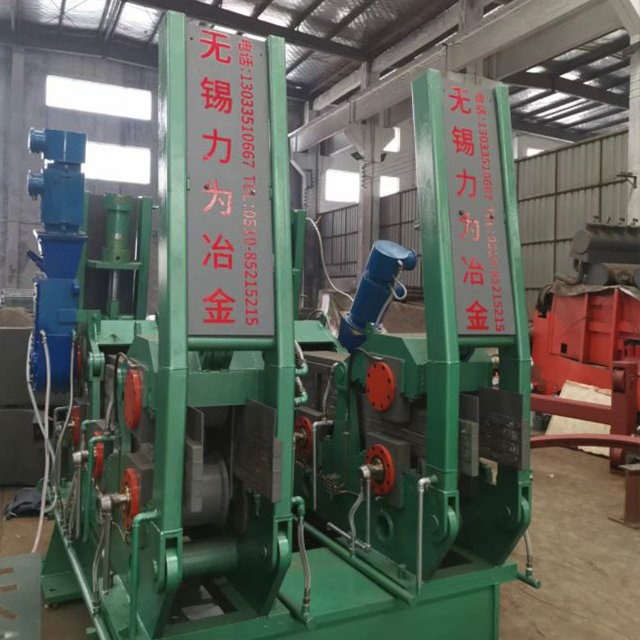
For steel plants planning new continuous casting lines or upgrading existing equipment, WUXI LIWEI METALLURGY EQUIPMENT CO., LTD provides integrated metallurgical engineering services covering continuous casting machine design, equipment manufacturing, installation, and commissioning. With experience in carbon and special steel CCM projects and related equipment such as electromagnetic stirring and strand-handling systems, the company can support customized continuous casting solutions based on plant capacity, billet specifications, and production requirements.
Conduct a comprehensive thermal audit of the current continuous casting process to map the actual solidification profile and identify the precise location of the crater end.
Optimize molten steel chemistry immediately by enforcing strict low-superheat targets (15°C to 25°C) and adjusting the Mn/S ratio to reduce baseline segregation sensitivity.
Evaluate the existing secondary cooling infrastructure and upgrade to air-mist nozzles in the upper zones to implement controlled hard-cooling without inducing thermal cracks.
Consult with continuous casting machine technology providers to conduct a feasibility study on retrofitting dynamic soft reduction segments for high-carbon and premium alloy production lines.
A: Center segregation is caused by solute rejection during the solidification process. As dendrites grow, they reject alloying elements like carbon, sulfur, and phosphorus into the liquid steel. This enriched liquid is pushed toward the center of the billet. Solidification shrinkage then creates a vacuum that draws this concentrated liquid into the core, forming a segregated band.
A: High superheat delays the formation of equiaxed crystals at the billet core. This allows long columnar grains to grow deep into the center, bridging together and trapping pockets of solute-rich liquid. Keeping superheat low promotes early equiaxed grain formation, which disperses solutes evenly and minimizes centerline concentration.
A: Soft reduction is a mechanical process where hydraulic rollers apply targeted compression to the billet during the final stages of solidification (the mushy zone). This gentle squeezing compensates for natural solidification shrinkage, closing central porosity and preventing solute-enriched liquid from pooling at the core.
A: While hard-cooling cannot eliminate segregation entirely, it significantly minimizes its severity. By accelerating the solidification rate, hard-cooling reduces the time available for solutes to migrate to the core. However, cooling rates must be carefully managed to prevent severe thermal stresses and internal cracking.
A: Sulfur strongly segregates to the center and forms low-melting-point iron sulfides, causing hot shortness and internal cracking. A high Manganese-to-Sulfur ratio ensures sulfur binds with manganese to form stable manganese sulfides instead. These precipitate earlier, reducing crack sensitivity and limiting sulfur mobility.
A: Cross-sectional shape dictates cooling symmetry. Round billets cool evenly from all sides, promoting a symmetrical solidification front. Square billets cool much faster at the corners than the mid-faces, creating uneven thermal gradients that force solute-rich liquid into a concentrated, often star-shaped pattern at the exact geometric center.
A: EMS uses rotating magnetic fields to stir the molten steel. Mold EMS breaks off the tips of growing dendrites, creating nucleation sites that increase the ratio of equiaxed crystals. Final EMS stirs the mushy zone near the end of solidification, physically breaking up localized solute concentrations and dispersing them evenly.