Views: 0 Author: Site Editor Publish Time: 2026-11-19 Origin: Site


A TMT quenching system helps develop rebar strength by controlling how the hot bar cools after rolling. In the quenching and self-tempering route commonly associated with TMT rebar, rapid surface cooling is followed by reheating from the hotter core and further cooling on the cooling bed.
The objective is not to make the entire bar as hard as possible. It is to produce a suitable combination of strength, ductility, and bending performance for the specified grade.
Achieving that balance requires more than water pressure. Steel chemistry, finishing temperature, bar diameter, rolling speed, cooling equipment, and product testing must work together.
Table of Contents

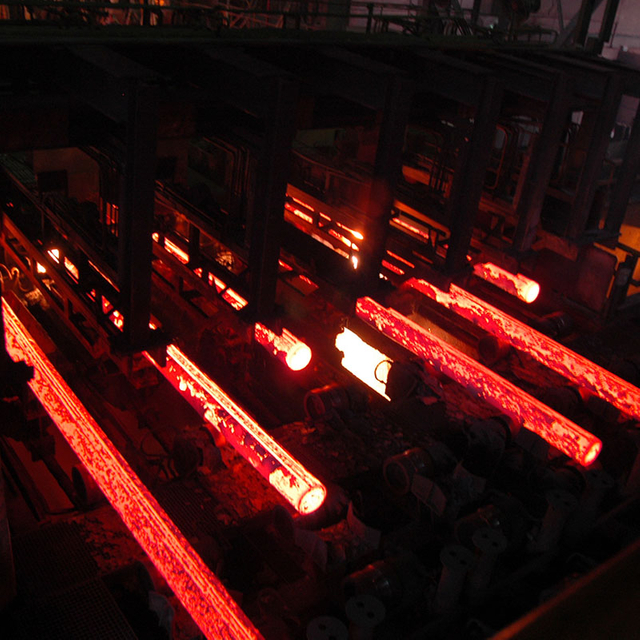
After the finishing stand, the hot rebar passes through a water-cooling section. Heat is removed quickly from its surface, allowing an outer martensitic layer to form while the core remains hotter.
The depth of this transformation depends on the steel composition and cooling history. Water delivery, exposure time, incoming temperature, and bar size all influence the result.
At this stage, the newly formed martensite has not yet completed the self-tempering process. Describing the outer layer as fully tempered immediately upon quenching would miss an important part of the treatment.
When intensive water cooling stops, heat flows from the hotter interior toward the cooler surface. This reheats and tempers the outer martensitic layer.
Self-tempering modifies the hardness and toughness of that layer. It is central to obtaining useful mechanical properties rather than simply creating a hard surface.
The process uses residual rolling heat. Its effectiveness depends on leaving an appropriate temperature distribution across the bar at the end of quenching.
The bar continues cooling after the water box and on the cooling bed. The remaining austenite in the core transforms, typically into ferrite and pearlite, with other constituents possible depending on composition and cooling conditions.
The finished cross-section commonly contains a tempered-martensitic outer region, a transition region, and a more ductile core.
These regions contribute together to the bar’s overall behavior. Their proportions and properties must suit the product specification rather than a universal target layer thickness.
Process stage | Main thermal change | Contribution to the finished bar |
|---|---|---|
Surface quenching | Rapid heat removal from the outside | Forms an outer martensitic layer |
Self-tempering | Heat transfers outward from the hotter interior | Tempers the hardened outer layer |
Subsequent cooling | The bar cools further and the core transforms | Develops the final cross-sectional microstructure |
The hardened and tempered outer region contributes to strength, while the core and transition region contribute to the overall strength–ductility balance.
More intense quenching is not automatically better. Excessive cooling can change the transformed depth and reduce the heat available for self-tempering. Insufficient cooling may leave the bar below its required strength.
The correct process window must be established for the steel chemistry, diameter, rolling conditions, and target grade. It should be verified through product testing.
Stable cooling helps reduce variation caused by changing thermal conditions. However, a repeatable valve position does not necessarily mean repeatable heat extraction.
Water temperature, nozzle condition, actual flow, rolling speed, and finishing temperature can change even when the selected recipe remains the same.
Reliable production therefore combines approved operating recipes with calibrated measurements and checks on the finished product. Head, middle, and tail behavior should be evaluated during process qualification where relevant.
Controlled quenching and self-tempering can help produce rebar with the required combination of strength and bendability.
Bending performance also depends on chemistry, surface quality, internal soundness, and the specified test conditions. Surface cracks or upstream defects cannot be corrected simply by adjusting cooling water.
Where bend or rebend testing is required, use the method and acceptance criteria applicable to the product specification.
A TMT route can support high-strength production using suitable low-carbon steel chemistry, but it does not automatically make every bar weldable.
Weldability depends on composition, the applicable carbon-equivalent assessment, bar size, joint design, and welding procedure. Quenching does not reduce the carbon equivalent of an existing steel heat.
Likewise, the process does not by itself establish corrosion resistance, fatigue life, or suitability for seismic reinforcement. Those claims require evidence relevant to the finished product and its intended application.
Incoming temperature affects how much heat must be removed and how much remains available for self-tempering.
Diameter changes the bar’s thermal response. Rolling speed changes the time available in the active cooling section. For a defined path, higher speed means shorter exposure time.
These variables must be considered together. A cooling recipe qualified for one diameter and speed should not be transferred to another without verification.
The quenching section must also fit the upstream rolling process and downstream handling arrangement. LIWEI’s rebar and wire rod rolling mill provides the relevant equipment context for discussing these line interfaces.
Pressure supports water delivery, but pressure alone does not describe cooling performance.
Inspect actual flow, nozzle geometry, active cooling length, and distribution around the bar. Worn or blocked components can produce uneven cooling even when a supply-pressure reading appears normal.
Water removal at the end of the intended cooling section also matters. Uncontrolled carryover can change the cooling history after the bar leaves the main treatment zone.
Pump selection, valve control, and any variable-speed arrangement should follow the hydraulic design. Adding a variable-frequency drive alone does not establish a qualified quenching process.
Scale and suspended solids can obstruct cooling passages and affect equipment condition. Rising supply-water temperature can also change heat-removal performance.
Define filtration, solids removal, water-temperature control, and chemistry limits around the equipment and site requirements.
There is no single suspended-solids limit or cooling-tower arrangement suitable for every installation. The supplier should specify acceptable conditions and the proposed water-treatment scope.
Useful measurements may include water flow, pressure, temperature, bar speed, and steel surface temperature at defined locations.
Pyrometer readings require careful interpretation. Steam, scale, water, viewing position, and instrument settings can affect the indicated temperature.
Automation can help maintain recipes, coordinate equipment, and record deviations. Whether a system provides recipe-based control or closed-loop correction must be confirmed from its actual design.
Process readings support quality control; they do not replace mechanical testing.

Before requesting a proposal, provide the steel grades, chemistry range, bar diameters, rolling speeds, finishing temperatures, and production arrangement.
Also supply the available layout, water conditions, utility capacity, and details of any existing cooling equipment.
Requirement | Information to establish |
|---|---|
Finished product | Applicable specification, grade, diameter range, and required properties |
Steel input | Chemistry range and incoming material condition |
Rolling conditions | Speed range, temperature range, and strand arrangement |
Cooling equipment | Active sections, hydraulic requirements, alignment, and water removal |
Site utilities | Water supply, treatment, drainage, electrical supply, and available space |
Controls | Measurements, recipes, alarms, interfaces, and data records |
Acceptance | Trial conditions, sampling plan, test methods, and responsibilities |
A proposal should identify its operating limits and exclusions. A cooling box cannot be evaluated independently of the production conditions around it.
Use an agreed sampling and testing plan to demonstrate that the finished product meets its requirements.
Depending on the specification, this may include tensile properties, elongation, bend or rebend performance, chemistry, dimensions, mass per unit length, and rib geometry.
Metallographic examination and hardness traverses can help investigate the treatment response during qualification or troubleshooting. They support diagnosis rather than replacing required acceptance tests.
Keep test results traceable to the steel heat, bar size, and process recipe. This makes it easier to distinguish chemistry-related variation from cooling-related variation.
If strength or bending results move outside the approved range, review the evidence before increasing water pressure.
Check material identity, temperature records, speed, water delivery, instrumentation, nozzle condition, and test reliability. Change settings through an approved process and verify the result.
For an existing mill, assess foundations, drainage, piping, maintenance access, and controls before planning a retrofit. Confirm how the new arrangement will interact with the rolling mill equipment and cooling bed.
To discuss a rebar rolling project, contact LIWEI with your production requirements. Include the target grade, diameter range, steel chemistry, rolling conditions, and available water-system information so the required cooling scope can be clarified.
No. In the quenching and self-tempering route described here, rapid surface quenching is followed by self-tempering and further cooling. The complete thermal history determines the final properties.
The retained heat flows toward the surface and tempers the newly formed martensitic layer. Cooling too deeply can reduce the heat available for this stage.
No. Quality depends on the combined effects of flow, distribution, exposure time, temperature, chemistry, and bar size. Use settings qualified for the intended product.
No. Weldability must be assessed using the steel composition, applicable product requirements, and the intended welding procedure. The TMT label alone is insufficient.
Potentially, after an engineering review. Available space, speed range, water supply, drainage, controls, product requirements, and downstream handling all affect feasibility and scope.