Views: 0 Author: Site Editor Publish Time: 2026-07-21 Origin: Site


Upgrading or establishing a continuous casting line is one of the most capital-intensive decisions in metallurgical manufacturing. It directly dictates plant throughput and product quality. Procurement teams and plant managers face highly opaque pricing models from equipment manufacturers. The base machinery cost often represents only a fraction of the total capital expenditure required to achieve operational readiness. Evaluating these investments requires looking far beyond the initial quote. You must understand the engineering realities of installation, commissioning, and long-term operation. To build an accurate budget and avoid severe cost overruns, buyers must evaluate the base continuous casting machine price alongside site preparation demands, automation tiers, and the strategic trade-offs between new, used, and retrofitted equipment. A miscalculation in civil engineering requirements or a misunderstanding of automation capabilities can derail project timelines.
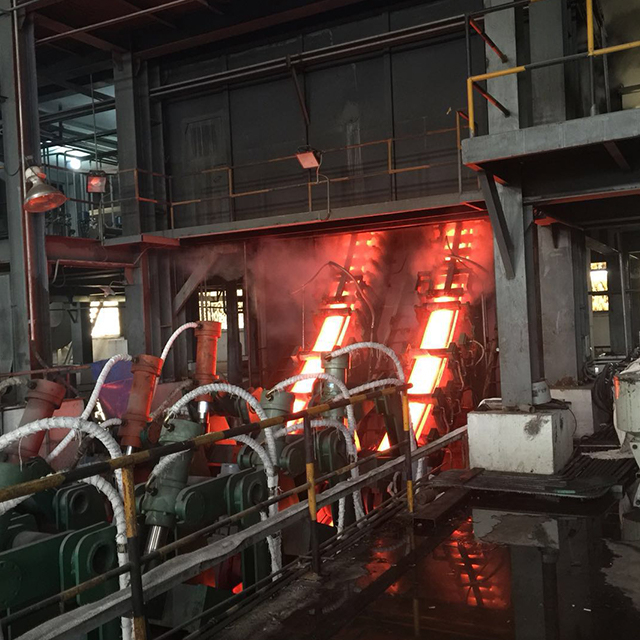
Base Price Variance: The continuous casting machine price ranges widely from small-scale, non-ferrous horizontal casters to multi-strand, high-capacity steel slab casters.
The Used Market Advantage: Sourcing used continuous casting machines can reduce initial capital expenditure, provided buyers rigorously audit for metallurgical fatigue and control system obsolescence.
Hidden Factors: Civil engineering, foundation work (especially for vertical and curved casters), and Level 2 automation integration frequently add substantial costs to the initial equipment purchase price.
ROI Drivers: Justifying the investment relies on calculating the specific yield improvements, energy efficiency gains, and standardized production quality compared to ingot casting or outdated infrastructure.
Table of Contents
The financial outlay required for continuous casting technology is fundamentally tied to the physical and metallurgical demands of the intended production line. Annual tonnage requirements dictate the physical size, cooling zone length, and structural robustness of the machine. When a facility requires high-volume output, the equipment must handle massive thermal loads and mechanical stress. This necessitates heavier frames, larger hydraulic systems, and more sophisticated water cooling infrastructure. Standard manufacturer capacity benchmarks typically assume a rigorous operational uptime over a standard working year. These baseline metrics directly influence contract negotiations. Guarantees on throughput and reliability require higher-grade components and tighter engineering tolerances.
Adding multiple strands to a single tundish scales the equipment cost, though not always linearly. A multi-strand machine requires a larger tundish, more complex flow control mechanisms, and duplicated mold, oscillator, and withdrawal assemblies for each strand. Sharing a single ladle turret and primary structural framework across multiple strands offers some capital efficiency compared to building entirely separate single-strand machines. The decision on strand count must balance the required casting speed with the metallurgical properties of the liquid metal being poured. If you push the casting speed too high on a limited number of strands, you risk severe breakouts and internal cracking.
The cross-sectional profile of the cast product drastically alters the engineering complexity of the machine. Small cross-section billets demand relatively straightforward tubular copper molds and simpler secondary cooling zones. The mechanical forces required to unbend and withdraw a solidifying billet are manageable with standard drive rolls and hydraulic units. Billet casters generally present a lower financial barrier to entry and are highly standardized across the industry. You can often source modular billet caster components from multiple vendors, which keeps replacement costs competitive.
Casting large slabs involves immense metallurgical challenges. Slab casters require complex plate molds with adjustable widths, sophisticated breakout prediction systems, and heavy-duty segment rollers to prevent bulging of the solidifying shell under ferrostatic pressure. The mechanical components must withstand extreme forces. The secondary cooling systems must be highly precise to prevent internal cracking or surface defects on wide profiles. This elevated engineering complexity translates directly into a substantially higher capital requirement for slab casting infrastructure. The segment rollers alone require massive bearings and specialized internal water cooling channels to survive the radiant heat.
The physical orientation of the casting process dictates not only the machine's design but also the surrounding facility requirements. Horizontal continuous casting machines present a lower initial equipment cost and drastically reduced civil engineering demands. Because the entire process occurs on a single elevation, plants can install these machines without excavating deep casting pits or constructing high-clearance ladle lifting towers. This cost-to-footprint ratio makes horizontal systems highly attractive. They command a dominant market share for specific billet and bloom applications, particularly in facilities with existing height restrictions.
Vertical and curved casters represent a different tier of investment. True vertical casters offer superior inclusion flotation and internal steel cleanliness but require massive vertical clearance. This necessitates either towering building structures or deep subterranean pits. Both options inflate construction budgets heavily. Curved casters mitigate some height requirements by bending the solidifying strand, but they introduce mechanical complexity through the unbending process. The structural steel, specialized withdrawal straighteners, and extensive foundation work required for curved casters make them a major capital commitment reserved for high-volume steelmaking.
Architecture Type | Civil Engineering Impact | Metallurgical Advantage | Relative Capital Expenditure |
|---|---|---|---|
Horizontal | Minimal (Surface level installation) | Good for specific non-ferrous and small billets | Lowest |
Curved (Bow-Type) | High (Requires moderate pits and heavy foundations) | Excellent balance of speed and quality | High |
True Vertical | Extreme (Requires deep pits or tall towers) | Superior inclusion flotation and cleanliness | Highest |
Modern casting operations rely heavily on automation to maintain safety and product quality. The chosen tier of control systems heavily influences the final equipment valuation. Basic setups manage fundamental machine movements, water flow rates, and basic safety interlocks. While functional, these basic systems require significant operator intervention and manual adjustment during the casting sequence. Relying on manual intervention increases the risk of human error, which can lead to catastrophic liquid metal breakouts.
Level 1 Automation: Basic PLC controls handling motor drives, valve actuation, and safety interlocks. Requires constant operator supervision.
Level 2 Automation: Introduces dynamic process control. Features automated mold level control using radioactive or electromagnetic sensors, and dynamic secondary cooling that adjusts water sprays based on real-time thermal modeling.
Level 3 Automation: Full plant integration. Ties the caster's production schedule directly into the melt shop and downstream rolling mill. Includes advanced quality tracking and predictive maintenance algorithms.
Integrating advanced sensors, software licenses, and precision actuators requires a larger upfront investment. It provides critical returns through reduced breakout frequency, lower scrap rates, and consistent metallurgical quality. Electromagnetic stirring (EMS) is another major cost adder. Installing mold, strand, and final EMS units requires heavy electrical infrastructure and specialized water-cooled copper coils, but it is mandatory for producing high-grade alloy steels.
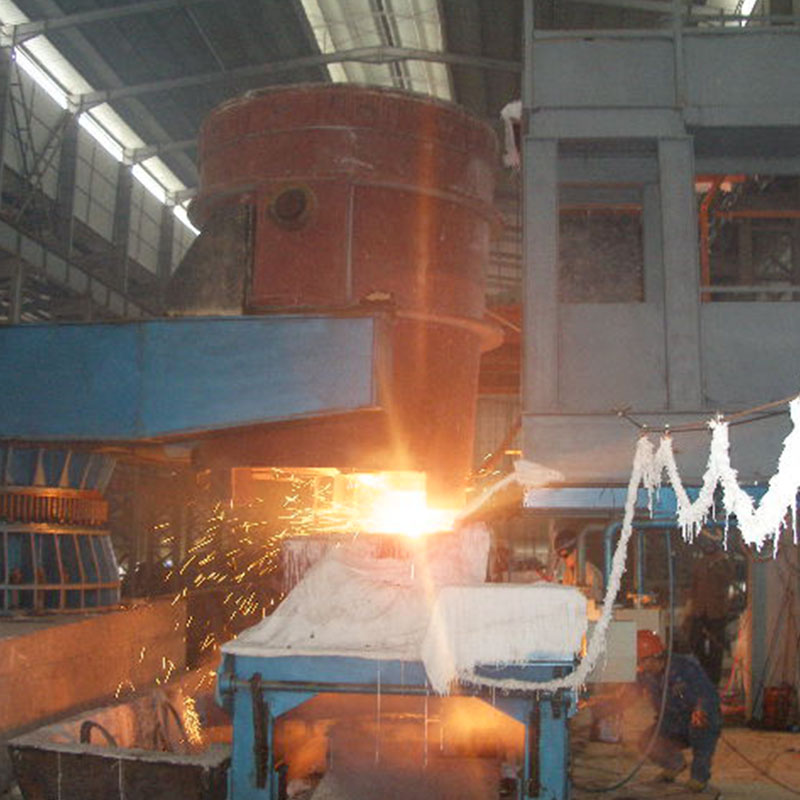
Procurement teams must navigate a diverse market landscape where equipment valuation fluctuates based on origin, condition, and intended industrial application. Commissioning a custom-built, brand-new machine from a top-tier European or North American manufacturer carries a significant brand premium. This premium reflects decades of proprietary metallurgical research, highly refined engineering tolerances, and comprehensive long-term support networks. Emerging Asian manufacturers offer highly competitive alternatives. They provide robust machinery that meets standard production requirements while requiring a lower initial capital outlay.
The divide between new and used equipment presents another major variable. Acquiring surplus or decommissioned continuous casting machines can drastically reduce the initial purchase expenditure. This route requires rigorous technical due diligence. Buyers must factor in the hidden costs of dismantling, international shipping, and the inevitable need to replace worn consumables and obsolete control systems before the machine can be safely recommissioned. You cannot simply plug in a twenty-year-old caster and expect it to meet modern quality standards without a massive overhaul.
Heavy industrial casters designed for integrated steel mills represent the pinnacle of metallurgical equipment investment. These machines are engineered for relentless production, aiming for exceptional operational uptime. The capital requirements for these systems are massive, reflecting the sheer scale of the machinery. Components such as ladle turrets capable of holding hundreds of tons of liquid steel, heavy-duty oscillators, and extensive run-out tables require massive structural fabrication and precision machining. The foundation work alone for a heavy slab caster can take a year to complete.
These high-volume machines are rarely off-the-shelf products. They are custom-engineered to match the specific heat sizes of the upstream melting furnaces and the dimensional requirements of the downstream rolling mills. The engineering consultation, custom fabrication, and extensive factory acceptance testing required for these heavy industrial casters place them in the highest tier of capital expenditure. Every roller, bearing, and spray nozzle is mapped out in detailed 3D models before a single piece of steel is cut.
Operating on a different scale, mini-mills and non-ferrous foundries utilize modular, smaller-scale continuous casting machines. These systems are frequently used for copper, aluminum, or specialized alloy production. The financial barrier to entry is significantly lower due to the reduced physical dimensions and lower melting temperatures of non-ferrous metals. The thermal stress on the machine components is less severe. This allows for lighter structural frames and less complex cooling infrastructure. You do not need massive hydraulic shears to cut aluminum billets; a standard flying saw is usually sufficient.
These smaller casters often feature modular designs. Facilities can install the equipment quickly and expand capacity by adding parallel strands as production demand grows. The simplified mechanics and standardized components make these machines highly accessible for regional foundries looking to transition from batch ingot casting to continuous production methods. Maintenance teams can often service these smaller machines using standard industrial tools, whereas heavy steel casters require specialized rigging and overhead cranes just to change a mold segment.
When researching casting equipment, procurement officers often encounter a wide spectrum of machinery categorized under similar terminology. You must distinguish between heavy industrial continuous casting lines and small-scale desktop or rotational setups. Industrial metallurgical lines are massive installations requiring dedicated buildings, high-voltage power supplies, and industrial water cooling circuits. They are designed to process tons of liquid metal per hour. The infrastructure required to support them is a permanent addition to the facility.
Desktop vacuum casting machines or resin rotational casting equipment are light-duty devices utilized in jewelry making, prototyping, or hobbyist applications. These small units operate on standard electrical currents and fit on workbenches. Mixing these distinct categories during market research can lead to skewed budget expectations and wasted procurement efforts. Industrial buyers must filter their sourcing strictly toward heavy metallurgical equipment manufacturers and specialized industrial surplus vendors. Do not waste time evaluating light-duty equipment if your goal is industrial metal production.
Purchasing pre-owned casting equipment offers a compelling pathway to expand capacity while preserving capital. The success of this strategy hinges entirely on the buyer's ability to accurately assess the physical condition and technological relevance of the used asset. A superficial inspection is insufficient. Procurement teams must deploy mechanical and metallurgical engineers to conduct comprehensive field audits of the machinery before finalizing any transaction. You need to get under the machine with a flashlight and a set of calipers to truly understand what you are buying.
The structural integrity of the machine framework is paramount. Continuous casting environments subject steel structures to extreme heat radiation, repeated thermal cycling, and constant vibration from mold oscillators. Inspectors must look for signs of metallurgical fatigue, micro-cracking in high-stress joints, and warping in the alignment of the strand guide segments. Any deviation in the alignment of the secondary cooling zone will cause severe internal defects in the cast product and increase the risk of catastrophic breakouts. If the main structural frame is warped, the machine is essentially scrap metal.
Component | Wear Indicator | Risk Level |
|---|---|---|
Mold Oscillator | Worn eccentric shafts, sloppy hydraulic actuators | High (Directly impacts surface quality) |
Secondary Cooling Piping | Heavy scaling, internal corrosion, blocked nozzles | Medium (Requires complete replacement if severe) |
Strand Guide Rollers | Thermal fatigue cracking, seized bearings | High (Causes internal cracking in the cast product) |
Main Structural Frame | Warping, micro-cracking at weld joints | Critical (Can render the machine unusable) |
Certain components in a continuous casting machine experience accelerated wear and require meticulous evaluation. The mold oscillator mechanism prevents the solidifying shell from sticking to the copper mold. It must operate with absolute precision. Worn eccentric shafts, degraded bearings, or sloppy hydraulic actuators in the oscillator will ruin surface quality. The dummy bar system, used to start the casting process, must be inspected for mechanical damage and chain wear. If the dummy bar disconnects prematurely during a cast, you will have a massive spill of liquid metal on the shop floor.
The secondary cooling zones demand close attention. Water jackets, spray nozzles, and internal piping are highly susceptible to scaling, corrosion, and blockage. If the previous operator utilized poor water treatment practices, the entire cooling infrastructure might require replacement. Evaluating the condition of the segment rollers is essential for estimating immediate repair liabilities. You must check for thermal fatigue cracking and bearing failure. Replacing a full set of segment rollers on a slab caster is a massive expense that must be factored into the purchase negotiation.
The original manufacturer's reputation heavily influences the residual value and risk profile of a used casting machine. Equipment built by established, globally recognized manufacturers often retains its value better. The original engineering documentation, metallurgical models, and structural designs are robust and well-documented. Knowing the specific model year helps buyers identify which generation of technology the machine represents and what inherent design flaws might exist. You can often contact the original OEM to pull the service history of a specific serial number.
Historical design modifications made by the previous owner must be scrutinized. Plant engineers frequently alter machinery to fit specific local needs. They sometimes bypass safety interlocks or modify cooling circuits in ways that deviate from the original manufacturer's specifications. Reversing poorly executed undocumented modifications can be a frustrating and expensive engineering challenge. If you find a machine covered in custom-welded brackets and bypassed hydraulic lines, walk away. The troubleshooting required to make it run reliably will consume any savings you gained on the purchase price.
A used machine rarely arrives ready for immediate, efficient production. Buyers must calculate the extensive costs associated with bringing older equipment up to modern safety and operational standards. The most common requirement is a complete overhaul of the automation and control systems. Obsolete PLCs, unsupported software platforms, and degraded sensor networks must be stripped out and replaced with contemporary hardware. You cannot run a modern steel plant on a control system running on floppy disks.
Hydraulic systems often require modernization. Upgrading older, leak-prone hydraulic valve stands to modern proportional valves improves the precision of the withdrawal straightener and the mold oscillator. These retrofitting projects require specialized engineering labor, custom software programming, and extensive testing. All of this must be factored into the initial procurement budget alongside the base purchase price. Do not underestimate the cost of running miles of new copper wire and hydraulic tubing to integrate a used machine into a new facility.
The long-term viability of a used equipment purchase depends heavily on the availability of spare parts and technical support. If the original manufacturer has gone out of business or officially deprecated the specific machine model, sourcing proprietary replacement parts becomes a major operational risk. Facilities may be forced to reverse-engineer and custom-machine broken components. This leads to extended downtime and inflated maintenance budgets. You need a reliable supply chain for consumable items, specifically the copper molds and refractory components designed for that exact machine geometry.
When negotiating with surplus vendors or refurbishers, securing a limited warranty or a performance guarantee provides a critical safety net. Establish a clear understanding of who is responsible for commissioning the machine. If the vendor simply drops the equipment at your loading dock and walks away, you are assuming a massive amount of technical risk. Always push for a contract that includes on-site supervision during the reassembly and cold testing phases.

The physical delivery of a continuous casting machine to the plant gate marks only the beginning of the deployment phase. The financial and logistical hurdles of installation, site preparation, and commissioning frequently rival the complexity of the equipment purchase itself. Failing to accurately forecast these implementation factors is the primary cause of budget overruns in metallurgical expansion projects. You cannot simply bolt a caster to an existing concrete floor. The dynamic loads and thermal stresses require specialized civil engineering.
Site preparation requires extensive civil engineering. For vertical and curved casters, contractors must excavate deep foundations, pour massive volumes of reinforced concrete to handle dynamic loads, and construct specialized water treatment facilities. Continuous casting requires immense volumes of highly controlled cooling water. Building the necessary scale pits, cooling towers, sand filters, and pump houses constitutes a major infrastructure project that must be completed before the machine can operate. The water treatment plant often takes up more physical space than the caster itself.
Transitioning from a disassembled machine to the first successful cast requires specialized labor and rigorous project management. Installation involves heavy rigging, precise laser alignment of the strand guide segments, and the complex routing of hydraulic, pneumatic, and electrical lines. This phase relies heavily on external engineering consultants and OEM supervisors. Their daily rates and travel expenses accumulate rapidly over a multi-month installation schedule. You must manage these contractors tightly to prevent schedule slip.
Cold Commissioning: Verifying all mechanical movements, hydraulic pressures, and electrical interlocks without liquid metal. This includes running the dummy bar through the machine multiple times to check for binding.
Water Testing: Pressurizing the primary and secondary cooling circuits to check for leaks and verify flow rates across all spray nozzles.
Hot Commissioning: Pouring actual liquid metal. This phase inevitably involves troubleshooting, tuning automation parameters, and optimizing cooling curves.
The existing workforce must undergo extensive training to safely operate the new equipment, understand the revised metallurgical parameters, and execute emergency breakout procedures. Operating a continuous caster is vastly different from pouring ingots. The operators must learn how to read the mold level sensors, interpret the thermal data from the secondary cooling zones, and react instantly to alarms. A poorly trained crew will destroy a new machine in a matter of weeks.
Continuous casting is a highly abrasive and thermally destructive process, resulting in a constant churn of consumable components. The copper molds extract the initial heat from the liquid metal. They wear down over time and require periodic re-machining and eventual replacement. Refractory materials, including tundish linings, submerged entry nozzles, and ladle shrouds, are consumed rapidly and represent a significant ongoing operational expense. You must maintain a large inventory of these refractories to prevent production bottlenecks.
Cooling water management is another continuous operational expenditure. Maintaining strict water chemistry is mandatory to prevent scaling inside the copper molds and secondary cooling nozzles. The costs of water treatment chemicals, filtration media, and regular maintenance of the pumping infrastructure are permanent fixtures in the facility's operating budget. If you neglect the water chemistry, the internal cooling channels of the copper mold will scale up, reducing heat transfer and causing a catastrophic breakout.
Protecting the capital investment requires a proactive approach to risk mitigation during the procurement and installation phases. Buyers should structure contracts with equipment vendors that tie payment schedules to specific, verifiable milestones. These milestones should include successful factory acceptance testing, delivery, cold commissioning, and final hot commissioning. Withholding a final percentage of the payment until the machine achieves a predefined operational uptime and product quality standard ensures vendor accountability. Never pay the full balance before the machine has successfully cast a full heat of metal.
Establishing strict Service Level Agreements (SLAs) for technical support and spare parts delivery minimizes the risk of extended downtime during the critical first year of operation. Engaging independent metallurgical consultants to review the machine design and oversee the commissioning process provides an objective layer of quality control. They ensure that the final installation meets the facility's long-term production goals. An independent set of eyes can catch engineering flaws that the OEM might try to gloss over during the design review.
Securing capital approval for a continuous casting line requires a robust business case that clearly demonstrates the financial returns generated by the technology. The primary justification lies in the dramatic improvement in material yield compared to traditional ingot casting methods. Ingot casting suffers from significant cropping losses. The top and bottom of each ingot must be cut away and scrapped due to shrinkage cavities and heavy inclusion concentrations. Continuous casting eliminates these specific defects, pushing usable material yields from historically lower percentages to highly efficient output levels.
This direct reduction in scrap translates immediately to the bottom line. Continuous casting standardizes the production process, reducing the reliance on manual labor and batch-based handling. The automated nature of the machinery lowers per-ton operational costs. It improves workplace safety by removing personnel from the immediate vicinity of liquid metal transfer. It provides a highly predictable output schedule that downstream rolling mills can rely upon. You can plan your rolling campaigns with much greater accuracy when you know exactly how many tons of billets the caster will produce per shift.
The thermal efficiency of continuous casting provides another major pillar for ROI justification. In traditional setups, ingots are cast, allowed to cool completely, transported, and then entirely reheated in soaking pits before rolling. This process consumes massive amounts of natural gas or electrical energy. Continuous casting enables the practice of hot charging or direct rolling. This is a massive operational advantage that fundamentally changes the economics of a steel plant.
By synchronizing the casting speed with the downstream rolling mill, facilities can take the solidifying billets or slabs directly from the caster run-out table and feed them into the rolling process while they still retain their core heat. This eliminates or drastically reduces the need for intermediate reheating furnaces. The resulting energy savings are substantial. It significantly lowers the carbon footprint of the production line and provides a rapid payback period on the initial equipment investment. You are essentially using the residual heat from the melting furnace to power the rolling process.
The true financial commitment required to implement continuous casting technology extends far beyond the initial quote provided by the manufacturer. While the base equipment cost is substantial, the surrounding requirements for civil engineering, advanced automation integration, and rigorous site preparation heavily weight the final capital expenditure. Choosing between new, custom-engineered machinery and retrofitted used equipment dictates not only the upfront budget but also the timeline to operational readiness and the long-term maintenance trajectory. Partnering with experienced equipment suppliers like WUXI LIWEI METALLURGY EQUIPMENT ensures high-precision engineering solutions, optimized continuous casting configurations, and dedicated technical support designed to maximize operational efficiency and return on investment for heavy metallurgical lines.
Initiate a comprehensive site audit to evaluate existing structural clearances, crane capacities, and water treatment infrastructure before engaging vendors. Draft a highly detailed Request for Quotation (RFQ) that explicitly separates the base machinery costs from installation, automation, and commissioning fees. Engage an independent metallurgical engineering firm to conduct a feasibility study on the proposed strand count and cooling requirements. Establish a phased payment schedule tied directly to verifiable commissioning milestones, such as successful cold testing and initial hot metal runs.
A: Scale is the primary driver of equipment costs. Small-scale, non-ferrous horizontal casters require lighter structural frames and simpler cooling systems, making them relatively accessible. In contrast, heavy multi-strand steel slab casters demand massive structural engineering, advanced automation, and extensive cooling infrastructure, requiring vastly larger capital investments.
A: Industrial continuous casting machines are massive metallurgical installations designed to process tons of liquid steel or copper per hour, requiring dedicated buildings and high-voltage infrastructure. Hobbyist vacuum or rotational casting equipment are light-duty, desktop-sized devices used for jewelry or resin, operating on standard electrical currents.
A: Purchasing used equipment can significantly reduce initial capital expenditure. However, it is only cost-effective if the buyer rigorously audits the machine for structural fatigue and accurately budgets for the necessary retrofitting of obsolete automation systems, hydraulic upgrades, and the replacement of worn copper molds.
A: Horizontal machines generally present a lower initial equipment cost and drastically reduce civil engineering expenses because they do not require deep excavation pits or towering vertical structures. Vertical casters require massive structural steel and deep foundations, significantly inflating the overall installation and facility construction budget.
A: The primary consumable costs include the copper molds, refractory materials such as tundish linings and submerged entry nozzles, casting powders used for lubrication, and the ongoing chemical treatment of the massive volumes of cooling water.
A: The timeline varies heavily based on machine size and site readiness. Installing a modular non-ferrous caster might take a few months. Heavy industrial steel casters requiring extensive civil foundation work, complex automation integration, and rigorous hot commissioning can take anywhere from 12 to 24 months to become fully operational.