Views: 0 Author: Site Editor Publish Time: 2026-08-17 Origin: Site


Stringent mechanical property requirements in modern steel applications demand absolute control over solidification dynamics during continuous casting. Uncontrolled fluid flow in the mold leads to the entrapment of slag, gas, and non-metallic inclusions. These trapped elements result in costly surface defects, centerline segregation, and high downgrade rates in billets and blooms. Plant operators constantly fight these imperfections while trying to maintain high throughput rates.
Implementing electromagnetic stirring casting introduces controlled, non-contact forces into the liquid steel pool. This technology actively manipulates solidification to produce cleaner steel, meet high-grade metallurgical standards, and stabilize overall productivity. We replace chaotic natural convection with engineered fluid dynamics, fundamentally altering the internal structure of the cast product. You gain direct control over the metallurgical length, ensuring consistent quality from the meniscus down to the final solidification point.
Defect Mitigation: EMS actively drives slag, entrapped gases, and other contaminants away from the solidifying shell, drastically reducing surface and sub-surface defects.
Structural Optimization & Mechanical Properties: The application of rotative electromagnetic forces breaks up dendritic growth, shifting the internal structure from a fragile columnar formation to a robust equiaxed grain structure, directly improving the final steel's mechanical properties.
Operational Efficiency: While requiring an initial capital expenditure and power draw, EMS improves yield, reduces downstream conditioning costs, and stabilizes continuous casting machine (CCM) throughput.
Implementation Complexity: Successful deployment requires precise parameter tuning (current and frequency) and careful integration with existing mold and strand geometries (including square, rectangular, and round applications) to avoid excessive refractory wear or negative metallurgical side effects.
Table of Contents
Relying solely on natural thermal convection and pouring kinetics fails to mix the liquid steel pool adequately. As molten steel enters the mold from the tundish through the submerged entry nozzle (SEN), severe temperature gradients form naturally. The steel making direct contact with the water-cooled copper walls freezes almost instantly, forming the initial shell. Meanwhile, the liquid core remains at a high superheat. This uneven temperature distribution creates localized cold spots and irregular solidification fronts down the strand.
Natural convection currents lack the kinetic energy required to homogenize this melt. The kinetic energy delivered by the SEN dissipates within the first meter of the mold. It cannot sustain a uniform flow pattern throughout the entire metallurgical length. Without external intervention, the fluid flow remains chaotic. Impurities settle into the solidifying matrix rather than floating to the surface meniscus where they belong. This lack of sustained mixing allows temperature stratifications to persist deep into the secondary cooling zone, directly contributing to uneven shell growth and increasing the risk of catastrophic breakouts.
Uncontrolled solidification triggers a cascade of specific quality failures on the casting floor. You will routinely encounter pinholes and blowholes when dissolved gases, such as argon injected at the slide gate or carbon monoxide from deoxidation, become trapped in the rapidly freezing steel shell. These gas pockets create localized weak points that open up during hot rolling.
Longitudinal and transverse cracks develop due to uneven thermal stresses and friction between the solidifying shell and the mold wall. When the shell thickness varies because of uneven heat transfer, thermal contraction occurs at different rates. This uneven contraction tears the fragile steel matrix apart. Centerline segregation represents another severe defect. As steel solidifies from the outside in, solute elements like carbon, sulfur, and phosphorus are rejected into the remaining liquid. Without adequate mixing, these elements concentrate heavily in the final liquid core. When this core finally freezes, it creates a highly segregated, brittle centerline.
Inclusion-related imperfections and severe segregation severely degrade the mechanical properties of the final rolled product. Non-metallic inclusions act as stress concentrators within the steel matrix. During downstream processing or end-use application, these inclusions initiate micro-cracks. This directly reduces the tensile strength and ductility of the steel. Components manufactured from such steel fail prematurely under load.
Fatigue resistance drops significantly when internal cleanliness is compromised. In applications subjected to cyclic loading, such as automotive axles, suspension springs, or structural beams, internal homogeneity is mandatory. Centerline segregation creates distinct bands of varying hardness. When subjected to stress, these hard, brittle bands fracture easily. The presence of long columnar dendrites further weakens the material, as the straight boundaries between these grains provide paths of least resistance for crack propagation.
The business impact of these defects extends far beyond the casting floor and directly erodes plant profitability. High scrap rates destroy yield metrics. When billets fail ultrasonic or macro-etch quality inspections, they must be downgraded to commercial quality or scrapped entirely. Scrapping requires remelting the steel in the electric arc furnace or basic oxygen furnace, consuming massive amounts of electrical and thermal energy.
Even when defects are minor, they require extensive surface grinding and scarfing before rolling. This adds heavy labor costs, consumes expensive abrasives, and creates massive production bottlenecks in the conditioning yard. In high-carbon or specialty alloy steel grades, rejected heats represent a massive financial loss. Customers demanding tight metallurgical tolerances will reject entire shipments if internal segregation exceeds specified limits. Failing to address solidification dynamics limits a plant's ability to compete in high-value, special bar quality (SBQ) steel markets.
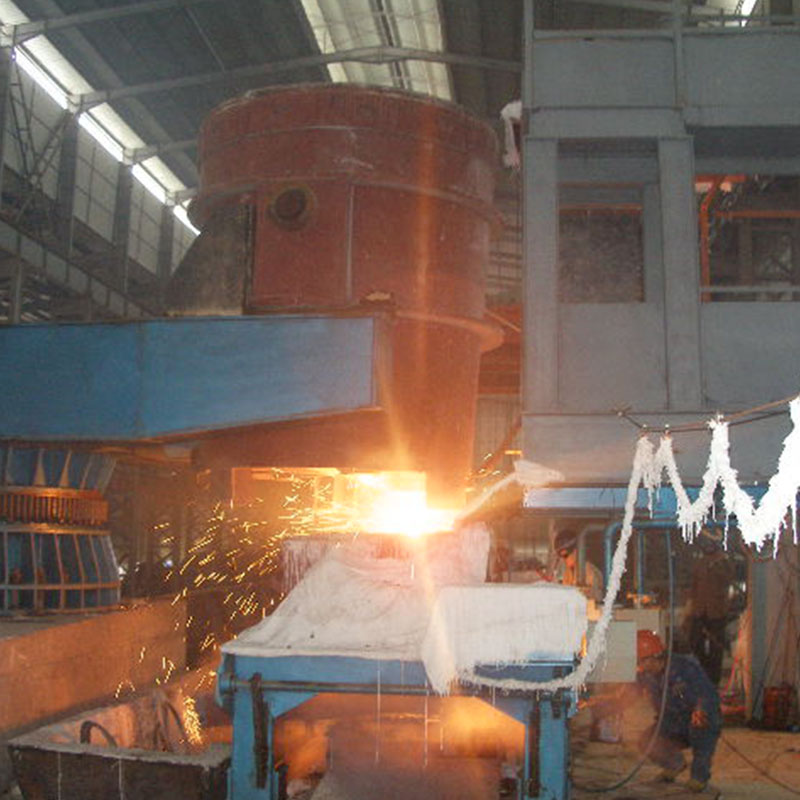
The underlying mechanism of electromagnetic stirring relies on the principles of magnetohydrodynamics. Alternating magnetic fields are generated by heavy-duty induction coils placed around the continuous casting mold or the secondary cooling strand. These magnetic fields penetrate the copper mold tube and enter the liquid steel. Because liquid steel is an excellent electrical conductor, the changing magnetic field induces strong eddy currents within the melt.
The interaction between these induced eddy currents and the primary magnetic field generates a directional force known as the Lorentz force. This force acts directly on the liquid metal, pushing the molten steel and creating a controlled, continuous flow. The strength of the Lorentz force depends on the magnetic flux density, the frequency of the alternating current, and the electrical conductivity of the steel. By adjusting the current and frequency supplied to the coils via variable frequency drives, operators precisely control the intensity and depth of the stirring action.
Different metallurgical goals require different fluid flow patterns within the strand. We utilize three primary stirring patterns based on the specific defect we need to eliminate.
Rotative Stirring: Creates a horizontal swirling motion, similar to stirring a liquid in a cylinder. This pattern generates centrifugal forces that push heavier liquid steel outward while forcing lighter non-metallic inclusions and gas bubbles toward the center. It is highly effective in the mold region for cleaning the sub-surface layer.
Linear Stirring: Induces a vertical flow, moving steel parallel to the casting direction. This pattern helps distribute superheat along the metallurgical length, preventing premature bridging of the solidifying shell and promoting a deeper liquid pool.
Helicoidal Stirring: Combines both rotative and linear movements, creating a complex spiral flow. This pattern offers a balance of inclusion removal and thermal homogenization, often utilized in larger bloom formats where deep magnetic penetration is necessary.
Modern electromagnetic stirrer technology adapts to various cross-sections, addressing the unique fluid dynamics of square, rectangular, and round billet applications. In round billets, rotative stirring achieves a highly symmetrical flow. The circular geometry allows the magnetic field to distribute evenly, creating a uniform washing effect against the entire shell perimeter without dead zones.
Square and rectangular formats present distinct fluid dynamic challenges. The corners of a square mold disrupt the circular flow pattern, creating localized turbulence and varying flow velocities. To compensate, coil designs for square molds are engineered to optimize the magnetic field distribution. This ensures sufficient fluid velocity in the corners to prevent inclusion entrapment without causing excessive turbulence at the mid-faces. Rectangular blooms require specialized coil configurations, sometimes utilizing linear stirrers on the broad faces to maintain consistent flow across the wider dimensions.
Electromagnetic stirring can be applied at three primary intervention points along the continuous casting machine. Each configuration serves a specific metallurgical purpose and targets different zones of the solidifying strand.
Mold EMS (M-EMS): Installed directly around the primary cooling mold housing. It focuses on surface quality, early heat transfer, and inclusion removal. By stirring the meniscus, it prevents mold powder entrapment, melts the casting powder evenly, and ensures a uniform initial shell thickness.
Strand EMS (S-EMS): Positioned in the secondary cooling zone below the mold. It focuses on breaking columnar dendrites and expanding the equiaxed zone. This stirring action dissipates remaining superheat and prevents the formation of internal cracks caused by thermal stress.
Final EMS (F-EMS): Located near the end of the metallurgical length, just before complete solidification. It focuses on mitigating centerline segregation and central porosity. By stirring the final remaining liquid core, it distributes rejected solutes evenly, preventing the formation of a brittle centerline.
The application of electromagnetic stirring fundamentally improves surface integrity. The rotative washing effect of the liquid steel prevents the entrapment of mold powder and slag. As the steel swirls, it continuously sweeps the solidification front. This sweeping action dislodges gas bubbles and non-metallic particles before the advancing solid shell can capture them.
This dynamic fluid flow also stabilizes the meniscus level. A stable meniscus ensures consistent melting of the mold flux, providing uniform liquid lubrication between the steel shell and the copper mold. Uniform lubrication minimizes friction, drastically reducing the occurrence of transverse and longitudinal surface cracks. The resulting billet requires significantly less surface conditioning, preserving material yield and accelerating downstream processing in the rolling mill.
The most profound metallurgical benefit is the transition from a columnar to an equiaxed grain structure. Without stirring, steel solidifies in long, needle-like columnar dendrites that grow inward from the mold walls toward the center. These columnar structures are inherently weak, highly directional, and prone to internal cracking under thermal stress during secondary cooling.
Electromagnetic stirring physically disrupts this growth. The induced fluid flow shears the fragile tips off the growing dendrites. These broken dendrite fragments are swept into the hotter center of the melt. Here, they act as independent nucleation sites. Instead of growing as long columns, the steel freezes into small, randomly oriented equiaxed grains. This equiaxed matrix is significantly denser, more uniform, and highly resistant to internal crack propagation.
Producing cleaner steel requires the active removal of non-metallic inclusions before the shell freezes. Rotative stirring generates a strong centrifugal effect within the mold. Because liquid steel is denser than alumina, silica, and other common inclusions, the centrifugal force pushes the heavy steel outward against the mold walls.
Simultaneously, the lighter inclusions are forced inward toward the center of the rotational axis. Once gathered at the center of the meniscus, these impurities are easily absorbed by the liquid mold flux floating on top of the steel. This active separation process drastically reduces the total oxygen content and inclusion density in the final cast product, meeting the strict cleanliness requirements of automotive and heavy machinery applications.

Thermal gradients drive uneven solidification and shell thinning. Stirring the liquid pool actively dissipates the superheat, rapidly bringing the entire melt closer to the liquidus temperature. This thermal homogenization prevents localized hot spots that can cause shell remelting and subsequent breakouts. A uniform temperature profile ensures consistent shell growth down the entire length of the strand.
Chemical homogenization addresses macro-segregation. As steel freezes, it rejects alloying elements like carbon, manganese, and sulfur into the liquid. If left stagnant, these elements pool in the center. Stirring continuously mixes the solute-rich liquid with the bulk melt, diluting the concentration. This continuous dilution minimizes solute concentration gradients, ensuring that the chemical composition of the billet surface matches the core.
Metallurgical Defect Resolution Matrix
Defect Type | Root Cause | EMS Intervention | Expected Outcome |
|---|---|---|---|
Pinholes & Blowholes | Trapped argon or CO gas at the shell interface | M-EMS (Rotative sweeping) | Gas bubbles dislodged and floated to meniscus |
Slag Entrapment | Meniscus level fluctuations, poor flux melting | M-EMS (Meniscus stabilization) | Uniform flux melting, clean sub-surface layer |
Internal Cracks | Columnar dendrite growth, thermal stress | S-EMS (Dendrite shearing) | Transition to dense equiaxed grain structure |
Centerline Segregation | Solute rejection pooling in the final liquid core | F-EMS (Final core mixing) | Homogenized chemical composition at the center |
The direct financial return of electromagnetic stirring manifests in prime yield increases. By eliminating surface pinholes and deep longitudinal cracks, operators drastically reduce the volume of rejected billets. Billets that previously required deep scarfing or grinding can now proceed directly to the rolling mill. This reduction in scrap translates to more sellable tons per heat and a higher percentage of prime product.
Furthermore, the elimination of severe centerline segregation allows steelmakers to cast higher-carbon grades without fear of internal failure. Producing these high-margin grades reliably increases the overall profitability of the casting operation. The reduction in downgraded material directly lowers the average production cost per ton, improving the plant's competitive position in the market.
Improved internal homogeneity and surface quality yield massive downstream benefits. When billets possess a uniform equiaxed structure, they deform more predictably during hot rolling. This predictability reduces the incidence of cobbles, which are catastrophic wrecks in the rolling mill caused by material failure or splitting.
Fewer surface defects also mean less mechanical wear on the rolling mill stands. Hard inclusions and surface cracks can damage roll surfaces, requiring frequent and expensive roll changes. By delivering a cleaner, more uniform billet, the continuous casting machine stabilizes the entire plant's productivity. The rolling mill can operate at higher speeds with less downtime for maintenance and roll dressing.
Running heavy induction coils requires a continuous electrical power supply. However, this energy consumption must be evaluated against the massive efficiency gains realized elsewhere in the process. The electrical draw of an EMS system is offset by the reduction in natural gas required for billet reheating. Defect-free billets can often be hot-charged directly into the rolling mill furnace, saving immense amounts of thermal energy.
Additionally, the improved thermal homogenization allows for higher casting speeds. Faster casting increases the overall throughput of the machine, spreading fixed costs over a larger tonnage. The energy consumed by the EMS is a necessary investment that unlocks higher overall process efficiency, ultimately lowering the total energy footprint per ton of finished steel.
Integrating EMS into existing continuous casting machines presents significant engineering challenges. Space constraints within the mold housing often dictate the size and placement of the induction coils. Engineers must carefully design the coil assemblies to fit within the existing water jacket without obstructing maintenance access or primary cooling water flow. You cannot compromise the primary cooling capacity of the mold to fit a stirrer.
Water-cooling requirements for the coils themselves add another layer of complexity. The induction coils generate substantial heat and require dedicated, high-purity cooling water circuits to prevent insulation failure. The water conductivity must be kept extremely low to prevent electrical tracking. Furthermore, magnetic shielding must be installed to prevent the magnetic fields from heating adjacent steel structures, such as the mold oscillation mechanism or the supporting frame.
Successful operation relies on sophisticated control systems. Variable frequency drives (VFDs) are essential for tuning the electrical input. Low frequencies, typically between 1 and 10 Hz, are required for Mold EMS because the thick copper mold acts as a magnetic shield. Higher frequencies attenuate too rapidly and fail to penetrate the copper to reach the liquid steel.
Optimizing the stirring intensity and frequency requires precise calibration based on the specific steel grade, casting speed, and billet format. High-carbon steels require different stirring intensities than low-carbon grades due to differences in solidification behavior. Operators must continuously monitor and adjust these parameters to maintain the optimal fluid velocity at the solidification front. Relying on static settings for all grades will result in suboptimal metallurgical performance.
While stirring is beneficial, excessive fluid velocity creates its own defects. If the stirring intensity is set too high, the sweeping action becomes too aggressive. It washes away the solute-rich liquid from the advancing solidification front. This localized depletion of alloying elements creates a zone of negative segregation, commonly referred to as a "white band" when viewed under macro-etching.
White bands represent areas of lower hardness and reduced tensile strength. To mitigate this risk, metallurgists must establish strict operating windows. The Lorentz force must be strong enough to break dendrites and remove inclusions, but gentle enough to avoid washing away essential solute elements. This delicate balance requires continuous process monitoring, precise VFD control, and periodic metallurgical sampling to verify internal quality.
Maintaining the EMS equipment is critical for sustained performance. The induction coils operate in a harsh environment characterized by high temperatures, moisture, and constant vibration from the mold oscillator. Regular inspection of the coil insulation and cooling water circuits is mandatory to prevent electrical shorts. Degradation of the coil insulation will lead to catastrophic failure and extended downtime.
The presence of the magnetic field can also impact the lifespan of the mold copper tubes. The induced eddy currents generate slight localized heating within the copper itself. While manageable, this requires careful monitoring of mold wear patterns and adjusting taper practices if necessary. The electrical supply systems, including the VFDs and transformers, demand routine preventative maintenance to ensure long-term reliability and consistent power delivery to the coils.
Initiate a comprehensive metallurgical audit of current casting defects to identify the exact location and nature of solidification failures.
Conduct computational fluid dynamics (CFD) modeling based on your specific mold geometry to map current flow patterns and predict EMS outcomes.
Consult with specialized equipment manufacturers to assess the physical space constraints of your current casting machine and determine retrofitting feasibility.
Establish a clear baseline of current surface conditioning costs and scrap rates to accurately calculate the expected return on investment.
Implement a pilot testing phase on a single strand to calibrate frequency and current parameters before rolling out the technology plant-wide.
From EMS Integration to Complete Continuous Casting Solutions
For steel plants looking to integrate electromagnetic stirring into a broader casting and rolling system, WUXI LIWEI METALLURGY EQUIPMENT CO., LTD provides metallurgical engineering design, equipment manufacturing, installation, commissioning, and turnkey solutions covering steel melting, continuous casting machines, rolling mills, and related auxiliary equipment. Operating since 1998, the company has worked with more than 300 customers across multiple international markets, bringing practical engineering and system-integration experience to continuous casting and metallurgical projects.
A: The primary function is to induce controlled fluid flow within the liquid steel pool using Lorentz forces. This active mixing homogenizes temperature, breaks up columnar dendrites, and drives non-metallic inclusions and gases away from the solidifying shell, resulting in a cleaner, more uniform internal structure.
A: By breaking dendrite tips during solidification, EMS shifts the internal structure from weak, directional columnar grains to a dense, randomly oriented equiaxed grain structure. This uniform matrix significantly enhances the steel's tensile strength, ductility, and resistance to internal cracking and fatigue.
A: M-EMS is installed around the primary copper mold to stabilize the meniscus, prevent slag entrapment, and improve surface quality. S-EMS is located lower down in the secondary cooling zone, focusing on dissipating remaining superheat and expanding the central equiaxed zone to prevent internal cracks.
A: In round billets, rotative stirring creates a naturally symmetrical, circular flow that washes evenly against the entire perimeter. For square billets, the coil design must be modified to ensure the magnetic field reaches the corners adequately without causing excessive, disruptive turbulence along the flat mid-faces.
A: Yes. If the stirring intensity is set too high, the excessive fluid velocity can wash away solute-rich liquid from the solidification front. This creates a zone of negative segregation, known as a "white band," which results in localized areas of reduced hardness and strength.
A: Yes, retrofitting is common, but it requires overcoming engineering challenges. Space constraints within the existing mold housing, the addition of dedicated high-purity cooling water circuits for the coils, and the installation of magnetic shielding to protect adjacent steel structures must all be carefully managed.